
S2-4-EN
Talk with Audrey Tang #4 Diverse Democracy, toward a Democracy of Plurality
Digital Direct Democracy and Universal Basic Income (UBI)
- Coordinator:Yukiko Shikata
-
Contents
-
Supporting Democracy for 20,000: First on a Small Scale
Louwrien Wijers: In an interview you say: working from a distance doesn't mean that you don't meet people face to face, it only means that we transcend space, boundaries, when we are talking to each other.
Audrey Tang: Yes, like now. Right? It also means that I meet people where they are. Because I can work anywhere as a minister. So, if I am to travel, and I do, every week on average in the past few months, I spend two days a week in Tainan in the south part of Taiwan, so that I meet the local neighborhood. If I cannot work in a telecommunication manner, everybody has to go to Taipei, which is unfair to their time and they only have an hour, but they have to spend an entire day to meet me. But only by telecommunication can we bring the attention of the central government to all places in Taiwan, and beyond when I travel abroad.
Louwrien Wijers: So, it's double.
Audrey Tang: Yes.
Louwrien Wijers: The entire world's population is at home on the Internet. Can we believe a global democratic approach is an adequate answer? Can we free the future together? How to involve everyone?
Audrey Tang: Yes, I think it needs to start at the lowest scale. It's only when any 100 people anywhere feel comfortable that they can - with the help of digital tools that assist them, not automates them - can come to collective decisions together. Can we think about 20 thousand people and then, can we think about 1 million people? And then can we think about the world? A lot of the early mistakes that people made in the 2010s is to mistake Facebook or other global platforms as the public square for their town.
Louwrien Wijers: Yes.
Audrey Tang: Because the context is lost. The compression is very glossy, and the profit incentive means that you end up consuming much more than you contribute to the common knowledge. And when we say, ‘assistive technology’ or ‘assistive intelligence’, I mean, specifically looking at my eyeglasses, which is ‘assistive technology’, right? It's very transparent. And if there is bias, I can fix it. I can repair it with the people down the street. I can learn how to apply super glue. I did a couple of months ago. So, I mean, this technology fits entirely with my dignity and the dignity of people in the same room in mind, despite it may be broken from time to time. That is well understood. Consider, if my eyeglass is not like this, but rather an optical camera, like the one Facebook just publishes, that captures all the photons, uploads them to the cloud, have the Facebook calibrated to my eye and send it back to my eyes. Then Facebook sees everything I see. And then more. Right? They know how to manipulate and push advertisements to my retina, and it becomes sticky, and I become addicted, and I cannot take it off. If people become addicted to that, then it is not possible to have a world democracy, because then people are addicted to something that is not democratically minded either. And, I said that jokingly to Nick Clegg, the VP of Global Engagement of Meta, just last week. We had a discussion about it. Yes. He was at the Athens World Democracy Forum, and he said, quoting me, that after learning about my work in alignment assemblies and so on, he is now convinced that Facebook, actually Meta not Facebook, Meta can support this vision. So, I mean, I don't hold grudges. I always say you can, you know, repent and be better. But I think, it is clear that we need to have a realistic vision of what assistive technology is to 100 or to 20 thousand people, before we think about world democracy.
Chatbots of the river: Statements by non-humans
Hilde Latour: I have one concern about all the data centers that are using our drinking water for cooling the servers. I mean, in the Netherlands we have Microsoft Data Center using more than 80 million liters of drinking water a year just for cooling. I don't know if you are aware of New Zealand researcher Veda Austin, who has shown that water has consciousness and can be programmed. How do you, well, you seem to be one of the most advanced countries in digital space. How do you cope with that problem?
Audrey Tang: Yes, it really is a problem. I think data center and the environment is a very important topic. In Taiwan we import a lot of our power energy sources like gas and so on from abroad, and so security of power sources is definitely a problem here. Now, Microsoft also says that they are investing in solving this problem with, I believe, first small nuclear reactors and then eventually fusion power. That is what they say. It is just their words, not mine, which, of course, uniquely present a challenge in Taiwan, because we had referenda about the nuclear topic, and it is one of the most controversial topics here in Taiwan. So, yes, your question, I think, does not have a universal answer. It does rely on people's ability to mobilize and visualize the relationship with nature, in this case with water. We have a team member working on a project called: ‘Say Hi to the River’. And what she is doing is that, to make a community minded avatar of sorts that represents a river, and a river would have some kind of legal personhood, like in New Zealand the Whanganui River or in India the Ganga River. These rivers can represent themselves in board meetings and so on, like companies do. So, they have some sort of legal personhood. And our intervention is to try to make it such that when they attend board meetings, instead of having humans only representing the rivers, there's interest to instead have a community of participants, data scientists, primary school children or whatever, to synthesize data sources that would accurately project a language model, or even an avatar with full video conferencing capabilities, that speak to everyone in the board representing the river, including the health status, including the spiritual status, including how it feels as to make a more, I would say, touching the ground way of representing what's actually happening in the waterways. So, this is one way, we think, of speculative design or art, it's very difficult to tell these two apart now, can influence political decisions. So, if you're interested in how we try to steer a very controversial conversation about water pollution and nuclear energy into something that primary schoolers can create, an avatar, I encourage you to check out the river chat bots I have pasted to the chat room.
Communities across borders: shared knowledge and beliefs
Oeds Westerhof: Can I ask a question a bit more like this? How do you define a digital society, or a digital community? I mean, we talked about it, about 15 minutes ago, I think. You said, it is up till 20 thousand people, that is a sort of amount of people that works in a digital society. But how do you relate that to borders? I mean, are the communities necessarily geographically ordered or in another way, and how does democracy work in that?
Audrey Tang: Yes, that's a great question. No, I think what I mean simply is, that a community needs to have common knowledge, or common belief, or a common purpose, where common knowledge means that: I know that you know that, and I know, you know that. And you know that I know that, at infinite, right? So, a common knowledge like this bind people together, separating this community from the rest of the world who don't yet have this common knowledge, which doesn't mean that they don't have the knowledge. It's just, they are not part of the common knowledge. And the same goes for belief in intentions. It is my observation that it is easier to have new association members absorbed into the community if any two people in the community have a common friend. That is to say, they are just one or two degrees apart and it don't mean that it cannot work on a larger scale. There are larger communities like the scientific community, of course, that have common knowledge and there are evidently more than 20 thousand people. But my point being in a non-geographically binded community, in a community that is connected primarily through the Internet, it is far harder to build correct mental models of each other using today's technology. But if people are only 1 or 2 degrees apart, we can make hybrid arrangements that make up for this deficiency. And then, when we do that, we still have common intent, common belief. That is to say, I believe this, and you believe the same thing and I believe you believe the same thing and so on. And that can still scale to a reasonable size. And as technologies improve, that capture more micro expressions in a privacy preserving way and then transmit across distance, I'm sure that we can extend to 3 or 4 degrees in an online only community. But today is not that day.
Oeds Westerhof: So, you need for building communities across borders something like rituals or objects that are tangible?
Audrey Tang: Exactly, yes. Common experience that needs everyone's participation that then leads to common knowledge and common belief. When I worked with people in Palo Alto during 2008 to 2016, for eight years, they have a Gordon Biersch, at a restaurant there and we have one in Taipei and we arrange the same time to go to respective TV- or to take out and they even send me Napa Valley, Red wine, like not expensive, a very cheap wine, but they do drink it. And then we arrange a video conferencing where we don't work, but just drink the same wine and have the same Gordon Biersch food. And this kind of common experience then creates common knowledge, empathy, that can sustain community.
Oeds Westerhof: Thank you.
Social Sculpture and Digital Direct Democracy: Society as a Work of Art
Louwrien Wijers: This is in fact, my last question. I hope you have more questions. Democracy gives everyone equal value. That is why the Expanded Concept of Art and Direct Democracy fit so well together. ‘Everyone is an Artist’, because everyone has creativity and talents. The most important work of art to be realized by us is the Social Sculpture, the society as a work of art. Do you agree?
Audrey Tang: Yes, as I shared my heart condition. Right. Vita Brevis Ars Longa: Life is short, art lasts. And the Social Sculpture is the kind of art that lasts because it is us. It is within us. Yes. So, I totally agree with the sentiment.
Louwrien Wijers: Beautiful. That was Beuys. But is there anything else?
Brigitta Scheepsma: Yes, if I may, because this morning we talked about the Social Sculpture and Beuys and his ideas about this, that you all, that we all, contribute and we all are responsible for the society, for the Social Sculpture. We also talked about Basic Income. We also asked you a question about it. But in the idea of Beuys, a Basic Income should free creativity in people. How do you see that in combination with Digital Direct Democracy, that people don't have to worry about their basic needs, they can free their talents and be creative and cooperative and participate in the Social Sculpture that we all are part of?
Audrey Tang: Yes. To me, we talk about the universal part, which is democracy and participation in the Social Sculpture. The basic part and the income part to me are two different things. The basic part to me is the socialist core. In the Taiwan Constitution, essentially all the basic needs should be free, and it should not cost money. It should be decoupled from money like the right to health, the right to learning, the right to communication, the right to democracy is not solved by income. This should not cost money to begin with. So, this is the basic part. And the income part, I do believe that, of course, creativity is sustained by a continuous influx of money, but I do want to share this idea of plural money. If you search for plural money rxc - for a RadicalxChange or https://www.radicalxchange.org/concepts/plural-money/ - you will see a re-imagination of money that is a sort of community money. Community money is a very old idea. It is money that cannot be taken over by a foreign source easily. It is money that has liquidity only within community and not outside of community. And with digital tools, it's now very easy to make plural community money. Unfortunately, most of the people who make them publicly are scammers, but I hope with the FTXN and whatever, they are now gone and some people who are still in the Web3 space are hopefully people who are more willing to public infrastructures for plural money. The great thing about plural money is that it associates the contribution better with the kind of money that you receive from UBI. So instead of people, you know, getting scammed or persuaded or consumer reason still compels people to spend most of their UBI toward things that they don't need. Instead, the kind of money you get from plural money cannot even be used to buy Coca-Cola anyway. So, I think this is the kind of basic income that I would personally more enjoy, and this is the kind of thing that we give out as, for example, the voting credits or tokens as part of presidential hackathon and other ideas on it and so the so bound tokens.
Brigitta Scheepsma: Thank you.
The Possibility of "Universal Translation": Indigenous Languages and Communities
Louwrien Wijers: Heb je nog een vraag?
Janneke van der Putten: Yes. Hello, thank you for being here. I'm Janneke and I have a question: you speak about a common experience, and also about the country being very well connected by train. But how is it with indigenous languages or communities? Because we have also a common language when we have a Zoom conversation. We now speak English. How is that with like other languages in your country?
Audrey Tang: Yes. It is a big problem in Taiwan that if you try to speak to ChatGPT with anything that's not Mandarin, ChatGPT doesn't know it, fakes it, and speaks Cantonese, while assuring you, it is speaking Tâi-gí, so it doesn't work. So, instead we think our own language models should be a national infrastructure. Our science minister is training now, as we speak, the trustworthy AAL engine, which is a language model specifically trained not to be a gentic or self-conscious, or frontier, or AGI, or whatever, but for the very simple need of translating between the national languages of Taiwan and summarizing them and so on, like everyday tasks. And once we have this kind of language model, we can then have simultaneous conversations, even lip syncing. That is to say, my lips will move as if I am speaking an indigenous language and the sound will still match my sound, except I'm speaking the indigenous language. And this assisted interaction is already being tested by our ministry in conjunction with the Minister of Health for sign language. So, at the moment, what we do is that people can call to sign language interpreters on their zoom, or online, or some, other team’s conversations, and so the sign interpreter joins the conversation and does the interpretation. But because such video channels also have automatic subtitle abilities, so that after some time we will be able to show the correspondence between the Taiwan sign language and the subtitle. And next we will then be able to train such models, so that the avatar can help signing when a sign interpreter is not available, or the interpreter becomes a coach to the sign robot and so on. And that will then enable us to support one more national language with this sign language in our everyday conversations. So the end result is, like a ‘Babel Fish’ right, a universal translator that takes care of the dignity of the indigenous nations and their culture and the most important part is, it needs to be open source and community governed, so that it is the indigenous nations in control of what goes in training of their language model, what goes into fine tuning of the norms, what is the acceptable way of addressing each other? And for that we have alignment assemblies. Deliberative democracy with online agendas setting like Polis, with face-to-face workshops and the end result is, the whole context goes into training the AI fine tuning, the model, so that it learns to respect the community that it is currently interpreting or translating to.
Oeds Westerhof: So, you say, you should improve your indigenous, or your national language instead of the universal language English.
Audrey Tang: Yes, exactly.
Oeds Westerhof: That will be a very interesting message for the universities in the Netherlands, since they all aim for English as the common language.
Audrey Tang: Yes, I think for Taiwan, I think most Taiwanese in universities, they read and hear, listen English just fine. It's just that they don't want to lose the nuances when they express. Right? So, we all read English. That's not a problem. But when we write in our native language, it captures more nuance than what we were actually thinking. If we're writing English, we are writing with a highly compression and so on. I am part of an exception, because I do my psychoanalysis in English, so I can think of English thoughts, but mostly in Taiwan it doesn't work like that. So yes, with this kind of native language model we can switch to a different imagination of bilingual education in that you just need to read English and not write it or listen to English without speaking it. And then when you speak your native language, it is just translated in real time by these language models.
Oeds Westerhof: Great. Thanks.
Social Models Representing the Whole Planet and the Role of Digital Technology
Egon Hanfstingl: Het is bijna half vier...
Louwrien Wijers: Ja ik weet het. En hoe is het met Yukiko moeten we haar nog bellen?
Audrey Tang: You know her, yes.
Louwrien Wijers: Yukiko is listening. Yukiko from Japan?
Audrey Tang: Yes, of course.
Louwrien Wijers: I thought, maybe she wanted to put a question.
Audrey Tang: I saw Yukiko’s name ever since I joined the conversation.
Louwrien Wijers: Did you?
Audrey Tang: Yes, because it is in kanji, right? I read kanji.
Egon Hanfstingl: Oh, there is Yukiko.
Louwrien Wijers: Where is Yukiko?
Egon Hanfstingl: I think here in this chat...
Audrey Tang: Yes. Where are you?
Louwrien Wijers: I'm looking at her.
Audrey Tang: Yukiko said: "Democracy is based on each nation and is from humans for humans. By the age of climate change people need to think and act beyond national borders." Of course I agree. Which is why we have built a chat bot representing a river. A river is a kind of spirit that lives longer than humans, and it is more than humans. One of the most human more than humans that we know. And Yukiko asks, "Can you explain my thoughts and how to realize it?" Yes, certainly, I think, first of all it's important to realize how important digital technology is to the awareness of the climate extinction, the climate crisis. We now have satellite technology that can count the number of trees that were being cut almost in real time, like five times a day. And so only with that kind of technology can we visualize the Earth and its ecosystem for climate as a single social object. Previously it was blocked by the clouds. People cannot imagine that this is like the first time. I put on the virtual reality glass in 2016. I immediately opened the star chart and held the Earth like between my hands, and I had this overview effect happening to me. It looks like a very brittle, small thing and suddenly borders no longer matter, because you cannot see borders from space. And so, I think digital technology is essential. Without digital technology, it's impossible to have an accurate whole of planet social object that people can interact with in real time. So, that’s the first thing and second, we need to make sure there is meaningful impact. Otherwise, it's just like watching a movie. Whatever you do from the audience, see the movie doesn't change, right? And so, there's no democracy. We are all just watching the Google Earth movie, right? So there needs to be some impact. And as simple as, you know, not using a plastic bottle, but simply refilling from your local environmental action’s office, that simple action on the Fong Cha phone app shows you how much you're contributing and how much it's being appreciated by people all over the world who are on the same mission. So, this is another thing digital technology that can help. It can build associations that transcend borders. So armed with the social object that is global and the interconnected local assembly and associations I think that is how we can begin to realize people's actions to act beyond borders. But it still feels like acting in a small community. It's just that it's now a community of value, not of neighborhood, of physical space.
Louwrien Wijers: Yes, understandable. And what does Yukiko say? I think she said: ‘thank you’, ‘thank you’. We are saying ‘thank you’ too. Without you, Yukiko Shikata, I would not have known Audrey Tang nor her humane and digital way of seeing our future.
Is there something somebody wants to say?
Oeds Westerhof: Wow, a thousand thoughts...
Brigitta Scheepsma: Yes, we heard a lot. We have to think again.
Louwrien Wijers: Wil jij nog iets zeggen? Want anders gaan we Thank You zeggen.
Oeds Westerhof: Thank you. Yes.
Louwrien Wijers: Thank you.
Audrey Tang: Yes. Thank you. Thank you. Very, very good conversation.
Louwrien Wijers: It was lovely to meet you this way.
Audrey Tang: Yes, looking forward to meeting you in high definition.
Louwrien Wijers: Wonderful, we'll be in contact today or tomorrow.
Audrey Tang: Definitely, Louwrien, definitely.
Louwrien Wijers: Thank you so much. Thank you.
Audrey Tang: Thank you.
TALK WITH AUDREY TANG
#1 CREATIVITY IS OUR REAL CAPITAL
#2 DEMOCRATIC COMPETENCIES
#3 TO "REPRESENT" ONESELF
#4 DIVERSE DEMOCRACY, TOWARD A DEMOCRACY OF PLURALITY
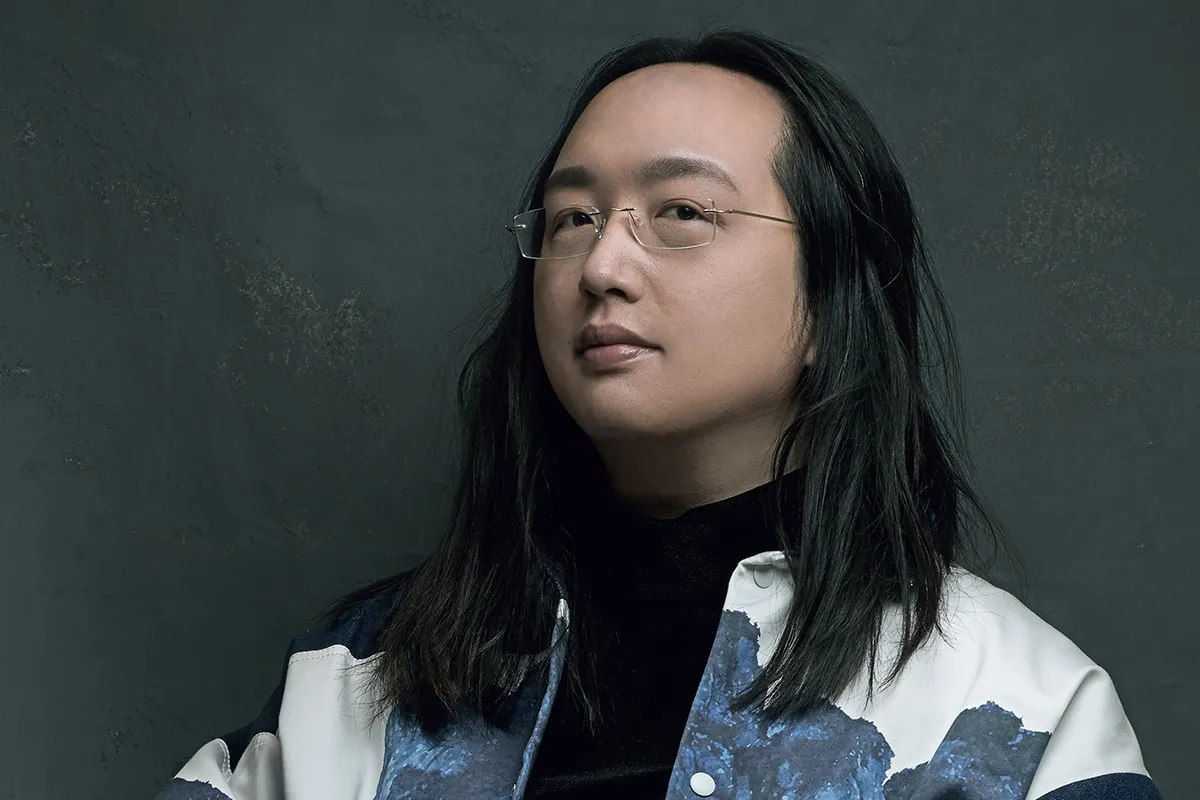
- Audrey Tang / 唐鳳
- Taiwanese politician and programmer, widely recognized as a programming prodigy. In 2016, she joined the Tsai Ing-wen administration as the Digital Minister. In 2022, she became the first Minister of the newly established Ministry of Digital Affairs. Tang has been a key advocate for government transparency, digital democracy, and open government. She emphasizes dialogue with citizens through social media and online forums, leveraging digital technology for democratization and social transformation. In June 2024, she resigned from government – peacefully and collaboratively – to focus on taking her vision to a wider audience.
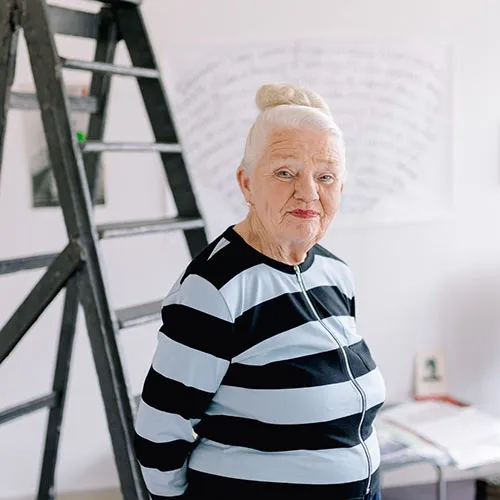
- Louwrien Wijers
- Born in 1941 in Aalten, Netherlands. An artist and writer, she encountered Fluxus in Paris in 1964. For 18 years, from 1968 to 1986, she closely collaborated with the German artist Joseph Beuys. Wijers considered “writing, speaking, and thinking” as forms of “social sculpture” (a concept by Beuys) and engaged in various fields of curation alongside her critical activities. In 1982, she facilitated a dialogue between Beuys and the 14th Dalai Lama. After Beuys’ death, in 1990, she organized the symposium “Art meets Science and Spirituality in a changing Economy” at the Stedelijk Museum in Amsterdam, bringing together prominent figures such as John Cage, Ilya Prigogine, Stanislav Menshikov, and the 14th Dalai Lama. Photo: Marleen Annema