

S2-1-EN
Talk with Audrey Tang #1 Creativity is Our Real Capital
Digital Direct Democracy and Universal Basic Income (UBI)
- Coordinator:Yukiko Shikata
-
Contents
-
Let's start with a Birdsong
Rory Pilgrim: Looking, now. Just look and see how far out of the window you can see.
Louwrien Wijers: Oh, Misty.
Rory Pilgrim: Yes. Maybe it's not so far now.
Egon Hanfstingl: It's raining.
Louwrien Wijers: Oh, is it raining?
Rory Pilgrim: But as you're looking, I was just going to ask if you can try and imagine a sound which might be in the far distance. And even if you can't hear it, to use your imagination of how far you might be able to hear or listen. Maybe it's the sound of the birds. The sound of rain. Or even the leaves far in the distance on the trees.
Louwrien Wijers: Oh, yes.
Rory Pilgrim: Yes. So now that you've had that sound, maybe you can just bring it back into the room.
(We see Audrey Tang appear on the screen.)
Louwrien Wijers: Are we going to start? Can you hear us?
Audrey Tang: Yes, I hear you just fine. Can you hear me?
Louwrien Wijers: Yes.
Charlotte van Winden: Yes, we can hear you.
Louwrien Wijers: Shall we start or what is your feeling?
Audrey Tang: I don't mind. We're just testing video and audio. But this is a rehearsal that lasts for five seconds.
Rory Pilgrim: Well, maybe it's very nice. We've zoomed out, and we now have a very far away voice, which is here all the way from Taiwan.
Louwrien Wijers: So good to see you.
Audrey Tang: Yes, very, very good to see you. Okay, so maybe if the sound and audio, everything works well, I would just get a cup of coffee and I will be back in a couple of minutes, and then we can start for real.
Louwrien Wijers: Good idea.
Audrey Tang: Okay, good. See you in a couple of minutes.
Louwrien Wijers: Yes. Okay.
Rory Pilgrim: I was going to play a little segment when we were thinking about technology. And this is the question of Direct Democracy. Of course, there are a lot of voices in the room. But maybe it's fitting. When I woke up this morning, I was thinking, oh, what could we listen to as a way to think about technology of the digital, and I actually started to think about, what was the first recording we have of a sound. So, when we think about our technology, why are we using it? What does it aid us with? Is it there to allow us to remember, to inscribe, to use as a tool for continuation or for connection? And I found the first recording ever of a bird which was made, it was actually done by an eight-year-old child from Germany, called Ludwig Koch. And yes, he made this as an eight-year-old. Probably he had access somehow to this recording device. It was made in 1889. The recording is only ten seconds long, but I thought it was a nice way just to think about listening in relation to technology and why do we use or how do we kind of use technology as a bridge between time and place?
Egon Hanfstingl: Oh, there's Audrey again.
Rory Pilgrim: So, if you just want to close your eyes, or look, for ten seconds we will listen to the first recorded bird.
Egon Hanfstingl: We can listen maybe together.
Louwrien Wijers: Yes, it's ten seconds. Okay, everyone ready?
Charlotte van Winden: Maybe you can explain again because, is Audrey joining as well?
Louwrien Wijers: Yes. Hello, Audrey.
Audrey Tang: Which way do I look, do I look this way?
Rory Pilgrim: My name is Rory. We would just as a way to prepare for thinking about Direct Democracy with the digital technology, I found a recording, the first ever, of birds from 1889. So, it's ten seconds long, and I am just playing it from my laptop. Okay? So, three, two, one.
Ludwig Koch and the Music of Nature
(the birdsong is playing)
Louwrien Wijers: What a good song to start with.
Democracy as Social Technology
Audrey Tang: Very much so. I think this is a great meeting between people practicing democracy and technology. To me democracy is a kind of technology, a social technology. And the more we practice, the better it is in terms of bandwidth, in terms of how much information can be transmitted between people. So, I think this recording reminds us of the possibility to have communication across not just space, but also time. And this is essential for making good decisions across different time zones. So very symbolic. I thank you for this opening.
Louwrien Wijers: Beautiful. So, we are talking about Digital Direct Democracy and Universal Basic Income. Audrey Tang is Taiwan's minister of Digital Affairs in charge of social innovation. I think that is the most important that you are in charge of, social innovation and that you are working on so hard. The subtitle of this is: Creativity is Our Real Capital. It is a slogan of the German artist Joseph Beuys, who I've worked with for 18 years. He wanted to make Direct Democracy by Referendum work in conjunction with Universal Basic Income for Everyone. So that people everywhere would be able to access their creativity again.
When Beuys said, “Creativity is Our Real Capital,” he warned us that money has nothing to do with capital. “Money is a legal instrument,” he explained. This is 40, 50 years ago. You, Audrey Tang, have brought us Digital Direct Democracy, and suddenly Direct Democracy seems so much more real, because it is digital. Now we, the citizens, can ourselves start to show our ideas for our future society. Do you have a vision how this can work?
Audrey Tang: In Taiwan Mandarin 數位 Shu-wei, which is the name of my ministry and of my role, means both digital and plural, it is the same word in Taiwan. So, a digital minister is also a minister for plurality. Plural means more than one. As Hannah Arendt did in a beautiful exposition on the human condition. Plurality is about analyzing the human condition, not as individuals, not as an aggregation of individuals, but as plurality, as people sharing common knowledge, common identities, together and acting in association instead of just as individuals. Money as an instrument often only characterizes individual accounts, which is why it got a private sector, right? On the other hand, our imagination of democracy and digital, plural democracy stems from enabling people to take collective action across differences. We have seen in some applications of AI, like supervised learning employed by Facebook, they make people more and more polarized, because they want to maximize addiction to people's loneliness. The more lonely people feel, the more addicted they become to their touch screens. It encourages this isolationist thinking by trapping people into addictive content that reinforces this sense of isolation.
On the other hand, there are systems like Polis, like OR, ideas like Talk to the City, many digital democracy tools that do the opposite. It is still AI, but it is not authoritarian. It is assistive. It brings people together naturally.
So, people who start with very different ideologies find their common values in plain sight simply by participating in such conversations in the digital realm. So that is my vision of Digital Democracy. It is the democracy based on collaborative diversity, which is plurality.
Digital Direct Democracy
Louwrien Wijers: Wonderful. Would you agree that Digital Direct Democracy is much more democratic than Direct Democracy by Referendum? Of course, as it is now. You have mentioned that in a way. But maybe because so many people have difficulty seeing the digital form and you know it…
Audrey Tang: Yes, I think, if you have used Twitter now called X.com, you sometimes notice that when somebody posts, like Elon Musk posts something, you sometimes see a note attached to that post saying, ‘what Elon says is not true’. Actually, it is something else. So, this is called Community Notes. This is a way for a citizen’s assembly, like a jury, to look at each other's tweets and suggests context that may be missing from that tweet. And in this contribution to the contextual commons, this epistemic commons, people's ideas float to the top if they can get acceptance, resonance by people of very different polarized ideologies. So, if both left and right think this is a good context, then this context gets attached to the tweet and cannot be taken down. So anytime you re-post that tweet it still retains the community notes. So, if people find it hard to imagine what plural technology looks like, I would encourage you to sign up for jury duty, either face to face if your jurisdictions have a jury, or online like in community notes, and suddenly you will find sometimes you get randomly sorted consultations into a smaller assembly, and that can have this kind of deliberation like we're having now. But the result becomes ‘the Commons’ that everybody can see. This is a form of Direct Democracy that is also deliberative, meaning that we spend time to listen to each other.
The Importance of Question Design in Digital Dialogue
Louwrien Wijers: You have warned us that the formulation of questions the citizens will have to answer digitally with ‘yes’ or ‘no’, that its formulation is very important. Could you please explain that further?
Audrey Tang: Certainly. In 2015, when we first used this plural technology called ‘Polis’, we talked about what to do with this shared economy or gig economy, where there's a new algorithm called Uber that lets people with no professional driver license pick up strangers they meet on the street and charging them for it. Now, many countries have trouble interacting with this innovation because this change is faster than the law of labor or of taxi changes. But in Taiwan, we make the Polis conversation starting with the Uber drivers, the taxi drivers, the passengers and so on. We ask them very simple questions, like, I have taken an Uber before, or I am a taxi driver and so on. Very easy. Yes, no questions. But a key is we open the questionnaire, the agenda setting to everyday people, so anyone can also type a simple question for other people to answer. And so, people type: “I think liability insurance is very important.” And then people upvoted it even though they started in very different ideological camps. Imagine, if we started with abstract questions like, I think Uber is extractive economy instead of sharing economy. Okay, this is beautiful academically, but it will lead to no constructive conversations, because everybody feels different when they see the term extractive economy or gig economy. On the other hand, whether it is about insurance liability, not undercutting existing meters, everybody has direct personal feelings they can talk about. So, any question that enhances the citizen storytelling capabilities, their narrative capabilities, is a good ‘yes’, ‘no’ question. And everything that is too abstract, that cannot be mapped into personal experience, is perhaps not the best to start with.
Louwrien Wijers: Great. Good.
Michiel Zonneveld: What I wonder is: is Uber operating now in a different way in Taiwan as it is here?
Audrey Tang: So if you're asking about Uber. Uber is now a taxi fleet called the Cue-Taxi. It never undercuts existing meters, and it is fully registered as a taxi fleet. At the same time, we change our laws so that taxis don't need to be painted yellow. They can enjoy surge pricing when there is fluctuating demand. And critically, the same law enabled that in every rural area, people who do long term health care to the elderly and so on, many of them immigrant workers, can now become co-ops. They can form co-ops that enjoy the same law that Uber is enjoying from and use app to dispatch and charging for extra income, picking up tourists or having their elders take care, along with other elderly in the same village and charging them collectively into a nearby hospital and so on. Such local taxi co-ops were illegal before, for the same reason why Uber was illegal. And so, in doing this conversation, we employed this Polis conversation that doesn't count the head counts of very different clusters of opinions, but rather the plurality. That is to say, the more dimensions they can include. So, if Uber mobilized 5000 people to vote exactly the same, it doesn't matter because we look for the diversity of the statements they propose. So, the statements of solidarity-economy, of co-ops, of unions turning into co-ops and so on, although smaller in population, they cover a wider range of plurality of ideas and therefore are more bridge making, more bipartisan, less captured by ideologies. So, just like community nodes float such bridge making bipartisan statements to the talk, so did Polis in our Uber conversation. So, these become the agenda, which then after a multi-stakeholder conversation became law. And so, I would say, as much as Uber benefits from the new law, the local co-ops and unions turned into co-ops benefited more. I hope that answered your question.
Michiel Zonneveld: Certainly, very much.
Quadratic Voting
Louwrien Wijers: Do you agree that a Universal Basic Income will help the Digital Direct Democracy spread more easily and more evenly?
Audrey Tang: That is a great question. In Taiwan, we already do quadratic voting and quadratic funding, recently renamed ‘plural voting’ and ‘plural funding’ in a way that does something like the UBI (Universal Basic Income), but it is not the UBI. I will explain. For example, every time we have a presidential hackathon, we ask the society to bring us like participatory budgeting, good ideas that solves climate or open digital green and so on. And after we get to 100 or so of those ideas anyone, all citizens that want to participate, get 99 tokens. These are not money. They cannot be bought and cannot be traded, but they are issued universally to anyone who wants to participate in a round of voting. Now, you support one project, you can vote 1 vote, which costs you 1 token. But if you want to vote 2 votes, it will cost you 4 tokens in total, 3 votes is 9 tokens in total, four 16 and so on. It is quadratic. So, with 99 tokens, the most you can vote on a single project is 9 votes, which costs 81 tokens, but you still have 18 left. So, nobody wants to squander their money, even though it's just tokens. So, they find some other project to vote for votes, which costs 16 means you have 2 left and then you're probably finding another 2. But most people at this point discovered there are synergies between many projects. They will take back some of the 9 votes. Maybe they do a 7 and 7, maybe they do a 3 and 3, and 4 and 4 and so on. And so, I think the problem with money was that it is too linear, it is too easy for someone to aggregate money. So even if that project doesn't have popular support, they can still dominate most of the matching grant schemes by the state. Because if we have a matching grant and if you are very rich, you can easily, I wouldn't say extort, but just get, capture, most of the matching grants if you start being rich. But in quadratic voting and quadratic funding, you have to mobilize as many people as possible, because otherwise your own money is only worth a square root, which is not many. So, what we have seen is that projects very actively work with each other to build synergies, to build coalitions, to turn zero sum games, as would in a matching grant into something that’s like a crowdsourced cooperation. So, I totally believe in annually or even monthly giving out credits, or tokens, or things like that. But it needs to be community money that is governed by a way that is not simple linear extrapolation, because otherwise the linear tyranny of money still enters play, even if it is UBI.
Louwrien Wijers: With UBI you mean Universal Basic Income?
Audrey Tang: Yes.
Brigitta Scheepsma: Yes. Interesting.
Louwrien Wijers: Very beautiful.
Oeds Westerhof: I would like to elaborate on this one. How do you organize that if you want to make this multiple functioning token? Do you already have examples of that or...?
Audrey Tang: Yes. It already exists. If you search for a Gitcoin, g-i-t-c-o-i-n, Gitcoin, it already exists. Every month, or a couple of months, they do a crowdfunding, but with no linear property, but rather with quadratic property. So, people would be encouraged, incentivized, to support as many projects as possible as long as they have synergy. So, there is no dynamic that leads to one capitalist dominating the matching grants discussion. The source code is open, it is free software, and it is not only done on Ethereum, or the crypto space, but in Taiwan we already use the same formula for crowdfunding, for state sponsored matching grants that also uses the same quadratic funding as a way to measure popular support and how much the state should match, should donate. So, if you want to know the details, the Gitcoin is available on the internet and our scheme is available in 100 API that you have, that I have pasted into the chat.
Oeds Westerhof: Great. Thank you.
Audrey Tang: Thank you.
TALK WITH AUDREY TANG
#1 CREATIVITY IS OUR REAL CAPITAL
#2 DEMOCRATIC COMPETENCIES
#3 TO "REPRESENT" ONESELF
#4 DIVERSE DEMOCRACY, TOWARD A DEMOCRACY OF PLURALITY

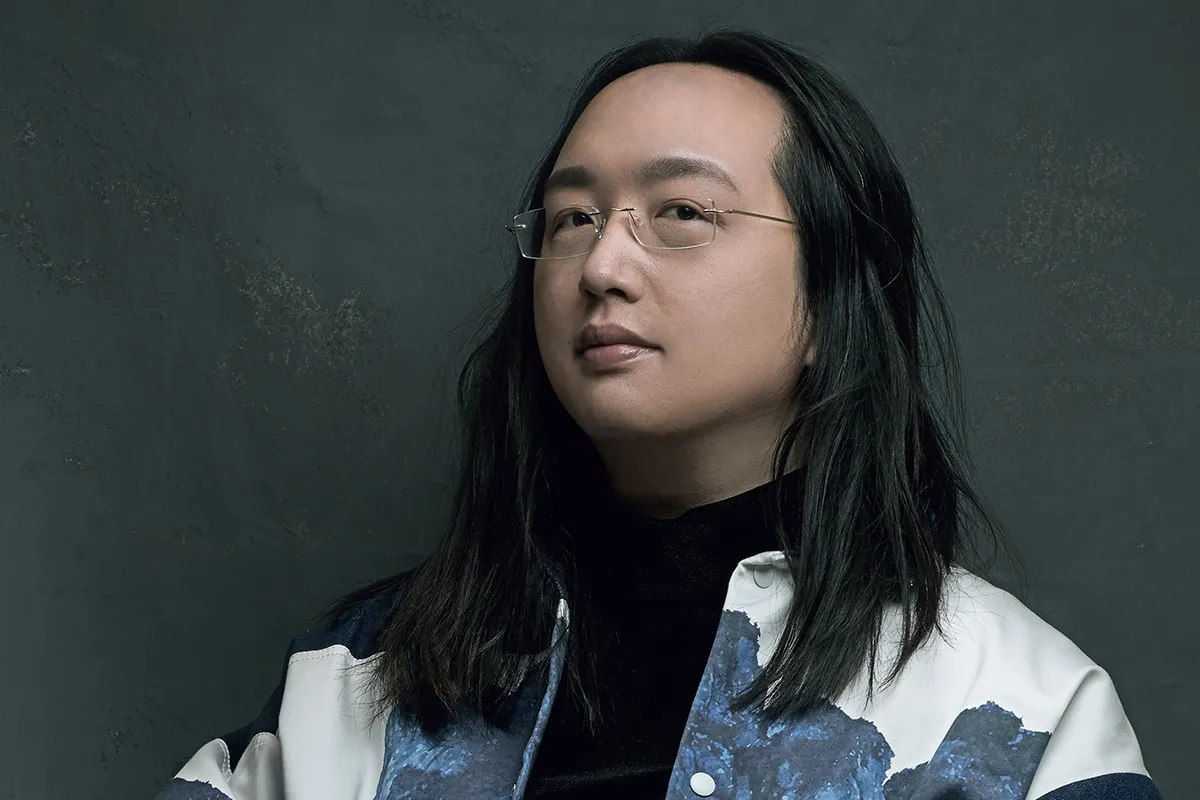
- Audrey Tang / 唐鳳
- Taiwanese politician and programmer, widely recognized as a programming prodigy. In 2016, she joined the Tsai Ing-wen administration as the Digital Minister. In 2022, she became the first Minister of the newly established Ministry of Digital Affairs. Tang has been a key advocate for government transparency, digital democracy, and open government. She emphasizes dialogue with citizens through social media and online forums, leveraging digital technology for democratization and social transformation. In June 2024, she resigned from government – peacefully and collaboratively – to focus on taking her vision to a wider audience.
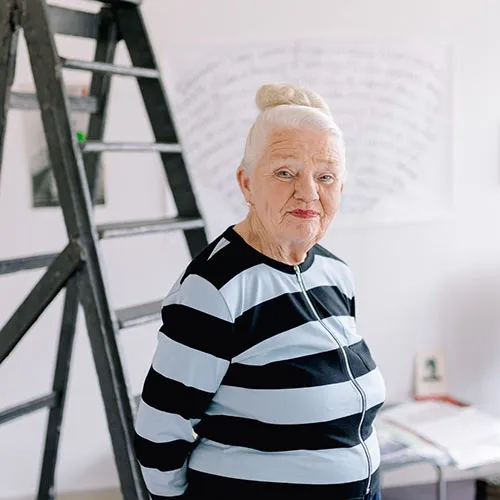
- Louwrien Wijers
- Born in 1941 in Aalten, Netherlands. An artist and writer, she encountered Fluxus in Paris in 1964. For 18 years, from 1968 to 1986, she closely collaborated with the German artist Joseph Beuys. Wijers considered “writing, speaking, and thinking” as forms of “social sculpture” (a concept by Beuys) and engaged in various fields of curation alongside her critical activities. In 1982, she facilitated a dialogue between Beuys and the 14th Dalai Lama. After Beuys’ death, in 1990, she organized the symposium “Art meets Science and Spirituality in a changing Economy” at the Stedelijk Museum in Amsterdam, bringing together prominent figures such as John Cage, Ilya Prigogine, Stanislav Menshikov, and the 14th Dalai Lama. Photo: Marleen Annema