

S2-3-EN
Talk with Audrey Tang #3 "Represent" Oneself
Digital Direct Democracy and Universal Basic Income (UBI)
- Coordinator:Yukiko Shikata
-
Contents
-
What we need now is collaboration that recognizes diversity
Louwrien Wijers: What guidance does society still need in the Digital Direct Democracy era?
Audrey Tang: I think the most important idea here is to collaborate across diversity. To see diversity in even Flame Wars, fights, as a source of energy. Many people are addicted to Instagram or Facebook and see conflict as something harmful, hurtful. They evade from it, essentially becoming isolated bubbles, that do not enjoy diversity at all and instead become very lonely or becoming competitive in terms of status and things like that. Well, we all know the symptoms. If we see instead that there could be a public square, a public space, that is not public in the sense of universally public, but only public in the sense of a local park. That is to say, the participants are people who either know each other or know a common friend. So that means it's at most around 20,000 people or so. And so, in that Dunbar's number square, we can have a public square that still preserves the contextual integrity, meaning that you will not face a random person nobody knows suddenly shouting at you and trolling your conversation. And so, in this local context, people can speak more freely and enjoy association with people who are very different from them, because they feel safe in associating, because at least you have a common friend, right? So, in such local integrity of contextual union, we can then foster conversations that are collaborative, and people can enjoy diversity a little bit more. And even if they fight, they become contributions to the community, to the code of conduct and things like that. It's easier to repair relationships when all of my associations are of the groups ranging from 100 to 20,000 people in size. That would be my main observation.
The Power of Minorities and Online Communities
Publik Universal Frxnd: I have a question about some issues which are still related to social stigma. I'm thinking about, as an example, sex work, where in a context, as far as I understand in Taiwan is practically illegal to do. In this sense, how do you mobilize majority voting on an issue where the minority are at risk of being criminalized practically discussing the situation they are in, and most people would also deny any kind of association with the industry, even though it's a huge market that operates in a kind of black market for example. So, in that sense, how, could Digital Direct Democracy then function in that way?
Audrey Tang: Fact Check. Legally, on the national level sex work is legal in Taiwan, like in New Zealand. Like in New Zealand it requires a community permit. Our difference with New Zealand is currently, all the existing permits have expired and there's no permits from new communities. So, technically you are correct. There is no place in Taiwan in which sex work is legal, but it is not because it is illegal by law, it is because there's currently no community that issued community permits for sex work. And so, that changes the conversation, right? The lobbying would not be to the legislators. They've already done the legislation. The lobbying would be up for the city councilors and so on to run with a platform of legalizing sex work in their communities. As I understood, there are many city councilors that run with such a platform in the next upcoming election. So, I can, of course speculate, like why no communities want to issue these permits. But I would simply say that this is not a taboo topic in Taiwan and people do have regular conversations. This, I think, enjoys more community involvement and so on compared to other interesting issues such as legalizing marijuana.
Publik Universal Frxnd: But then, in the context, even though it is legal and there’s… Oh, are you still there?
Egon Hanfstingl: Nou, daar is ze weer.
Audrey Tang: Sorry, I missed the other half of the context.
Publik Universal Frxnd: I was just saying that, yes, it's difficult because, I think, it corresponds to discussions here, where sex is legal, for example. But when the public are asked, in general there's an overwhelming resistance. So, it's like everybody doesn't want any kind of sex work to happen in their neighborhood for example. But there is an enormous market for sex work. And I can just imagine it's the same thing in general, because of social stigma. So, I understand that it's possible, but it's like in the context of allowing communities to decide actually, it means that people operate in...
Audrey Tang: No, no, I totally relate because, you know, when I was a teenager, Taiwan was not that tolerant to non-binary transgender people. So, the fact that I today face no discrimination doesn't mean that 30 years ago I faced no discrimination. And the great thing about the Internet is that it enables us to make neighborhoods of values, even though physically very distant, because on the Internet everything is light speed. Well, except when there's Internet troubles. But when there are no Internet problems, everything travels at light speed. And so that means people who are discriminated against in many different countries, even though maybe the general sentiments in all these countries are against them, they can still find each other and build a vibrant Internet community using privacy enhancing technologies. We have seen that in LGBTIQ communities. We have seen that with people who worry about climate change, even before climate change becoming a mainstream thing. People who worry about Generative AI, even before Generative AI is becoming a mainstream thing, and so on. There are parts of the Internet that become a safe haven for such communities. And recently we have found out that such communities now make full use of the decision-making tools that we just talked about, Polis and things like that to come to terms. Some of them even form DAO's, decentralized-autonomous-organizations and so on, while protecting their pseudonymity. So, I think I am optimistic to say that the online to offline movements that take some of those style ideas and to organize in-person meetings, like the Zuzalu, or whatever. I think that makes a lot of sense in that, if we can develop strong personal links using deliberative direct democratic tools online, we will feel like a community, a neighborhood, neighbors even before meeting each other physically for the first time. So then afterwards, we can mobilize offline action later, when there is the right action to be made. And the incubation period can be as long as a few decades because Internet will probably still be around for another 20 years. So, I'm optimistic. But I do hear you and see the challenge in the immediate physical neighborhood.
Sources of Innovation: The Presidential Hackathon and Data Altruism
Hilde Latour: Could you tell us a little bit more about the presidential hackathon and what was the best idea that came out of it and was implemented?
Audrey Tang: Okay, sure. And I'm wearing the presidential hackathon shirt. Yes, this is the zero and one of the presidential hackathons. Presidential hackathon has a long tradition now. We're on the sixth year, and every year has five brilliant ideas. It's like asking a parent: Who's your favorite kid? It's impossible. But I will nevertheless highlight something that may be useful to know. For example, I think last year, one of the champions was a very simple idea called Circular Plus, Circulatory Plus. What it does is that it asks people to register on a shared map that they want to offer free drinking water to the citizens, to anyone. It could be a fountain, a self-help fountain, it could be a local store and so on and it used the term 赠茶, giving tea, which is an ancient Taiwanese tradition for people who place a huge teapot and some cups under a tree so that people who walk nearby can help themselves with water and this direct action prompted many local social entrepreneurs and community builders to use this common map as a way to basically direct elicitation of association members. Because once you stay for filling a cup of water or things like that, you hear their story and things like that make the ideas much easier to disperse. And because there's a push to ban plastic straws and plastic cups and bottles and so on for environmentalism. So, every time you open an app, it shows you how many other people saved, how many tons of CO2 and know how many are around you, and if you just go out and refill the water, you get to know the fellow people saving the earth or things like that. So, it has become an association tool and sooner than later, many different tools, like a heat stroke warning system was added, which is another presidential hackathon team, added to this space app. And this space app also introduced people to other possible collective actions as well and so it became a mobiliser of sorts of citizens. And so a long story short, I think the greatest ideas are the ones that transcend boundaries. So, we learned that in Japan there is a service called “mymizu”—“mizu” means water—,, which does the same thing in Japan. And this year the international track also brought someone from India doing a very similar but slightly different idea in India and then using blockchains or other distributed technology. We can then do global coordination based on the local participation and so on. And so, I think this is a beautiful term for data altruism, people who donate non-personal data to make the earth better. I think this is one of the best open digital and green movements that started as part of the presidential hackathon.
Hilde Latour: Data altruism. Great. Great term.
The "Publish and Perish" Philosophy: Being "a Good Enough Ancestor”
Louwrien Wijers: I have a question to you that comes from Jan Atze Nicolai originally. It says: What is your motivation to do this? What is your goal?
Audrey Tang: There are 17 global goals and 169 targets. I'm not going to list them all. I'm speaking very personal. I was born in 1981 with a heart defect and my earliest memory was when I was four years old and I was at the doctor visit and the doctor looking at my X-ray and so on, was telling my parents that this child only has a 50% chance of growing up to be mature enough to have the heart surgery. And so, this is like having an existential crisis as your first memory. I eventually grew up to when I was 12, in ‘93, when I did get a heart surgery, and I'm perfectly fine now. But for the first 12 years of my life, I go to sleep without knowing whether I will wake up. This existential condition instilled in me this habit, that I need to make public everything I learn every day, because otherwise I will not be around the next day. Publish and then perish. Right, so this idea of publishing before I go becoming a core motivation so that I think of myself as a conduit, like the good ideas entering my mind, I publish it every day and then I go to sleep and I can feel safe, because even if I don't wake up, it's already in the public domain. And so, that's why I renounce copyright for all my work, because I cannot deny 70 years of people who want to enjoy my work when I go, right? So, my point being, I want to be a good enough ancestor. I want the future generations to enjoy more possibilities than I currently enjoy. I don't want to foreclose them with a perfect AI design or anything like that. So, a good enough ancestor is someone who leaves the world a better place with more possibilities when I log-off, compared to when I log-in to this world.
Louwrien Wijers: Beautiful. Wonderful.
Audrey Tang: Thank you.
Communication of the Future: Hybrid Possibilities
Louwrien Wijers: Normally it is said that when we speak to each other, 60% of our communication goes face to face and mind-direct, only 40% is through the meaning of the words we exchange. Would digital communication be the same or different?
Audrey Tang: It will be the same...
Louwrien Wijers: The same?
Audrey Tang: Yes, the same. I had, I think, five years, six, almost six years of psychoanalysis, four days every week with my analyst in France, in Paris, Giselle. She insists that we must meet every six months for a month or so. I visit her in Paris and have a classical Freudian or Lacanian session. But then, the other five months we get to do, like this, through video conference. That is because in video we don't have the micro-expressions. So, the smaller expressions are lost. This is the kind of loss in compression. So, what we do, is psychological projection. We project like in the dreams what your actual feeling is. But because we don't know each other, those projections are probably already wrong. So, it is possible to do creative work on video conference alone, but it is usually within a given scope. To think outside of the box, you need, at the moment, face to face interaction, which is the main insight we got from five years of tele- psychoanalysis. But to think outside of the box, doesn't mean that we cannot extend the relationship, because every half a year I calibrate my mental model of Giselle and Giselle of me, so that’s for the next few months, even though it is just video link, we have pretty good mental models of each other without suffering from psychological projection. So, a hybrid mode is probably the best to go.
Louwrien Wijers: It's something you have to learn?
Audrey Tang: Yes. And with virtual reality becoming more commonplace it’s easier and easier to enter into a hybrid mode with some people in the room and some people online.
Daoism and "Conservative Anarchism": Fusion of old and new systems
Louwrien Wijers: Yes. And then: Would Digital Direct Democracy be a better chance for us to understand each other, than today's use of many words, long sentences and written reports of thousands of words?
Audrey Tang: I totally agree. I mean, for me, Direct Democracy is just another word for Daoism, right? Spiritual Daoism and not religious Daoism. Which is my main belief system when I grew up. And then later on, I find that there are branches of early anarchism that sounded exactly the same as Daoism. But I use the term ‘conservative anarchism’ not just to have some fun in bringing polar opposites together, but also to highlight the fact that you do not need to violently disrupt an existing system, if you can show that an older system can interoperate with a newer system that gradually makes the old one obsolete. This is the Buckminster Fuller insight, right? That’s the ‘trim tab’ insight. And I think this kind of ‘trim tabs’ are easier and easier to make now that with digital tools, we can find fellow ‘trim tabs’ simply by you writing the email to me and then we have this conversation.
Gender column is "N/A" and party column is "N/A": Beyond the dichotomy
Louwrien Wijers: Zijn er vragen? Of zal ik gewoon verder gaan? (Are there questions, or shall I just proceed?) The film ‘The Rocky Road to Democracy’ of 2021, said: 'Audrey Tang champions policies in which citizens play an active role in political decision making'. Maybe you can say more.
Audrey Tang: Yes, I think my politics is that of credible neutrality. I don't belong to any political parties. When I filed my cabinet HR form in 2016, in the gender field, I wrote ‘not applicable’, and in the party field also ‘not applicable’. So, I am not binary, not just in gender, but also in left and right wing and so on. Because I believe a bird needs two wings to fly. So basically, the idea here is that I take all the sides. If there are some parts of Taiwan that I cannot fathom why they have this ideology, why they form this party, I always think it's my problem. It's not these people's problem. And I always spend some time to hang out with them, to live with them, to ethnographical just hanging out, to hang out and make stories together. And then I begin to see the world from their perspective. And only then, do I make judgments. So, I think it's important for a governing person not to see decision as coming from a mandate of sovereignty that makes us the representative of people. I don't believe in that legitimacy theory. I think we should make room, make space, for people to represent themselves as themselves, not through a representative person. So, I am only making a space and not representing anyone and therefore I'm taking all the sides, because all the sides can project into the spaces like the petition platform, presidential hackathon, every work that I do.
Oeds Westerhof: So, there is no other ideology than democracy?
Audrey Tang: Yes. And by democracy, I mean, of course collaborative diversity. Yes.
There are more independent ministers in Taiwan: ideological fusion
Oeds Westerhof: Very interesting. I have to think about that a bit. I mean, our democratic system is based on the clash of ideologies, more or less. And saying, what you are saying is for me the next question: How do you see formal democracy then?
Audrey Tang: Yes, I believe in a blending of ideologies. And in Taiwan, I'm not unique. There are more non-partisan or independent cabinet ministers than ministers of any party in Taiwan. So, this is the norm. This is not just me being very weird. The way our Constitution is designed is the citizens directly elect the president, who appoints the premier, who assembles a cabinet. So, I am a double appointee, and my constituency is anyone with an email address, right? I don't need a constituency in the formal democratic sense. So, if we design the constitution such that the ideation and the first draft, finding common purpose, is done in the politically and ideologically neutral way, the executive branch, then it is sent to the legislative branch, which does have four major parties with the usual party politics. But we separate these two very clearly in the double diamond design thinking in ideal. It means that you have a very clear point between the first diamond, which is about discover and define and the second diamond, which is about to develop and deliver. So that develop and deliver is still in parliamentary politics, but the discovery of citizens’ needs and the definition of the common goal, that belongs in a political and ideologically neutral cabinet, which is the executive branch. This is our constitutional form.
Oeds Westerhof: Okay. And then elections, for the part that is not the political one, then not a clash of ideologies. How are you elected? Because there must be something that you distinguish yourself from somebody else.
Audrey Tang: No, I'm not elected, right? I'm a double appointee. Okay? People elect a president, who appoints the premier, who appoints me.
Oeds Westerhof: Okay. Clear.
Audrey Tang: In Taiwan, this is when I say, peaceful coexistence with old systems, I really mean it. Because every year we vote. One year we vote for mayors, another year for a general referendum, then the next year for president and legislators and another year again for general referendum. So, it is representative, direct representative, direct on alternating years. That means that the parties will not hijack the conversation when it is the referendum year and vice versa.
Oeds Westerhof: Sorry, to understand it: You are appointed by somebody? So it is in your interest, the next elections, that the same person is going to be elected again.
Audrey Tang: I don't really care.
Oeds Westerhof: Okay.
Audrey Tang: We have now four presidential candidates, and I was part of the previous cabinet in 2014 as well. Not a minister, a reverse mentor and advisor to a minister. But it is normal. I mean, the minister of Economy in 2015 is still the minister for Trade Negotiations in 2016, even though a completely different president and party became the ruling party. So, if someone in the cabinet doesn't belong to a political party, it is normal for them to continue in the cabinet, even if a completely different party become president.
Oeds Westerhof: Thank you.
Audrey Tang: It's weird. It's very different. Yes.
Oeds Westerhof: Well, not that much. I mean for the Netherlands, yes. But if you go to Germany and you look at how a city is governed there, it's quite similar to what you describe.
Audrey Tang: Yes. I think it helps that from the north most of Taiwan's metropolis Taipei, to the south most Kao-hsiung, by high-speed rail is just an hour and a half. So, in many senses our constitution is designed like a larger municipality and not like a federal government.
Oeds Westerhof: Yes.
TALK WITH AUDREY TANG
#1 CREATIVITY IS OUR REAL CAPITAL
#2 DEMOCRATIC COMPETENCIES
#3 TO "REPRESENT" ONESELF
#4 DIVERSE DEMOCRACY, TOWARD A DEMOCRACY OF PLURALITY

- Audrey Tang / 唐鳳
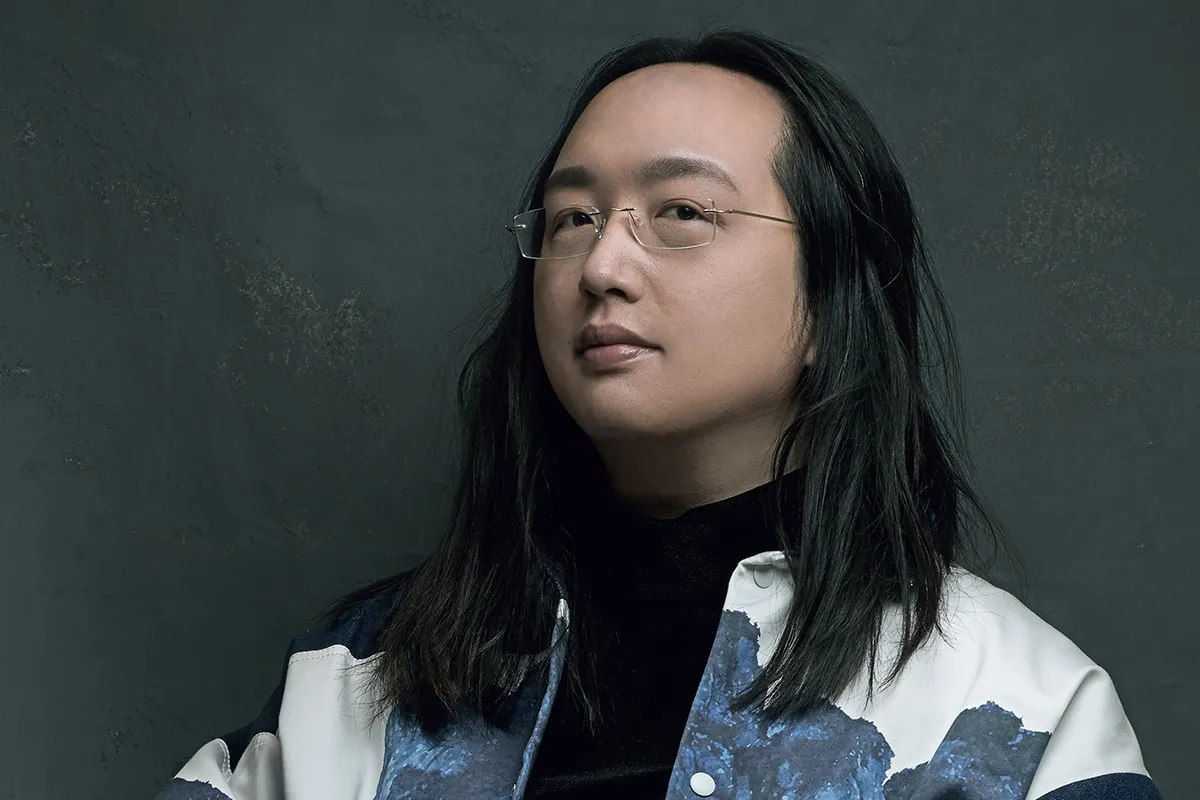
- Taiwanese politician and programmer, widely recognized as a programming prodigy. In 2016, she joined the Tsai Ing-wen administration as the Digital Minister. In 2022, she became the first Minister of the newly established Ministry of Digital Affairs. Tang has been a key advocate for government transparency, digital democracy, and open government. She emphasizes dialogue with citizens through social media and online forums, leveraging digital technology for democratization and social transformation. In June 2024, she resigned from government – peacefully and collaboratively – to focus on taking her vision to a wider audience.
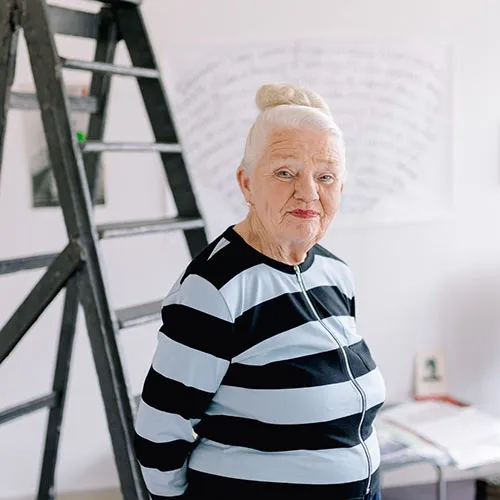
- Louwrien Wijers
- Born in 1941 in Aalten, Netherlands. An artist and writer, she encountered Fluxus in Paris in 1964. For 18 years, from 1968 to 1986, she closely collaborated with the German artist Joseph Beuys. Wijers considered “writing, speaking, and thinking” as forms of “social sculpture” (a concept by Beuys) and engaged in various fields of curation alongside her critical activities. In 1982, she facilitated a dialogue between Beuys and the 14th Dalai Lama. After Beuys’ death, in 1990, she organized the symposium “Art meets Science and Spirituality in a changing Economy” at the Stedelijk Museum in Amsterdam, bringing together prominent figures such as John Cage, Ilya Prigogine, Stanislav Menshikov, and the 14th Dalai Lama. Photo: Marleen Annema