

F2-2-4
Part2 往復書簡/Correspondence ——孫世代から見た磯崎新
#4 RUI Architects ⇄ clovisbaronian
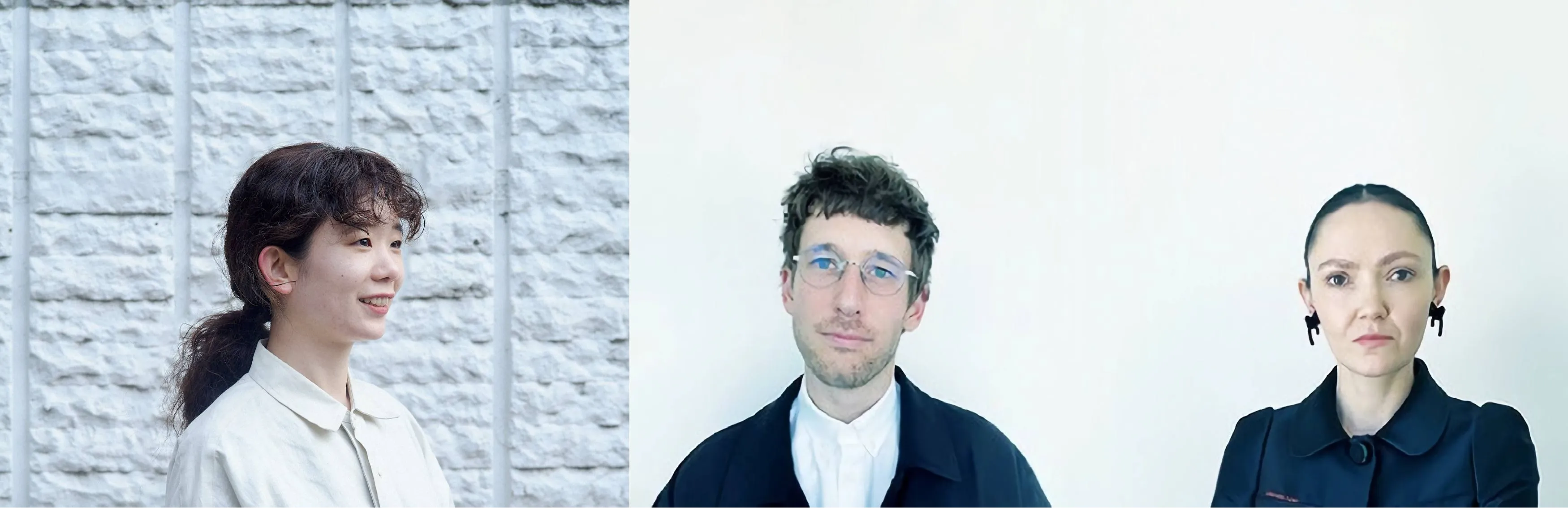
4 pairs of Japanese and North American architects exchanged texts and images before opening the exhibition at Shinjuku White House (currently, members-only art space “WHITEHOUSE”) and “a83” in New York fall 2023. Each pair shares conversations on a document-sharing file online between them and processes to make the installation together. #4 is a correspondence between Tokyo-based architect Rui Itasaka and California and Texas-based architectural practice clovisbaronian. (For more information, please see #0.)
-
Contents
-
230427/12:00/Rui
Hello, I’m Rui. Sorry it took so long to contact you.
I look forward to working together!
I am ashamed to say that I have never read any of Arata Isozaki’s books.
However, Jun Aoki (architect), whom I respect, is from Arata Isozaki’s office, and Tezzo Nishizawa (architect), with whom I am currently collaborating, is from Jun Aoki’s office.
Through this project, I hope to find my own connection with Arata Isozaki.
How about you?
230503/18:12/Sam, clovisbaronian
Hello Rui, it seems it is our turn to apologize for the delayed response. We are very much looking forward to collaborating with you on this project.
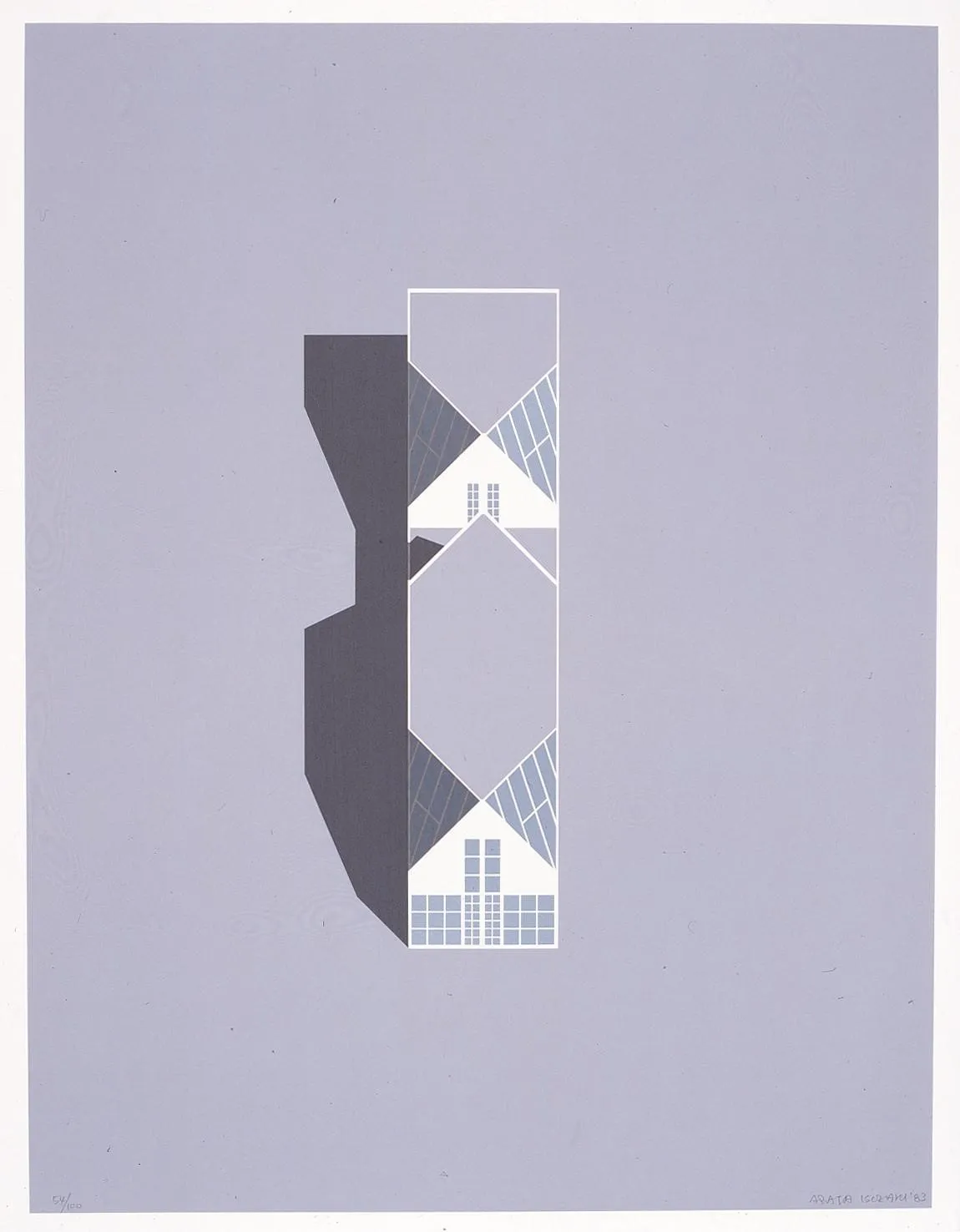
For me, Isozaki has always been quite an enigmatic figure. He seemed to be part of many different conversations but at the same time existed on the periphery of them. I’m thinking specifically about the Metabolists, and then with other Post-Modernists. I’m most familiar of course with his MOCA project in Los Angeles (1981-86), where our office is currently based. I believe the Björnson Studio and House (1981-86) in Venice was completed around the same time. Of course, both of these projects came about decades after Shinjuku White House (1957).
-
Björnson Studio and House (1981-86) in Venice, California
©︎Estate of Arata Isozaki
I’m approaching this from the vantage point of an entirely different generation, but it always seemed to me that Isozaki and his contemporaries seemed to represent a point of departure from what we (at least those in the US) considered to be Japanese architecture. Architects like Wright, Gropius, and Schindler had all been influenced by very traditional Japanese works, such as the Katsura Imperial Villa. Even Gehry at a later time. Isozaki seemed to be doing the opposite, pulling from Modern and Classical Western references. I was reading an interview with Isozaki where he had mentioned Shinjuku White House, and he stated that the structural plan of the house was apparently modeled after Le Corbusier’s design for Maisons Lipchitz & Miestschaninoff / Studio Miestschaninoff. I think Tange, and his influence from Corbusier, likely laid the groundwork for this cosmopolitan approach to design. I’m curious if architects in Japan see Isozaki in a similar way. Do you feel like his work has any influence on your generation?
230503/18:25/Georgina, clovisbaronian
Rui, so lovely to be introduced!
I am fortunate to have met Isozaki-san back in 2013, while I was still living in Japan and working at SANAA. Sejima-san organized an office trip to Kyushu to visit Isozaki-san and see many of his projects there, including the Kitakyushu Central Library (1973-74), the Kitakyushu City Museum of Art (1972-1974), and the Oita Prefectural Library (1962-66).
In the context of our collaboration, I think there are ideas that possibly can be mined from Isozaki-san regarding his fascination with the ruin. Ruin is a bit of a loaded term and has a reputation for being romanticized, but that’s the term he used. I’m sure you’re familiar with the famous collage Isozaki-san produced of the future city built on crumbling Greek ruins. In the text that he wrote to accompany that image, Incubation Process, he writes on architecture’s fleeting existence, stating that “all of our proposals will be buried.” And now, many of Isozaki-san’s works have been eradicated, although not in the picturesque way that he fantasized in his screen-printed images, simply erased. It’s surprising that his earliest work, Shinjuku White House, has managed to avoid that same fate.
There is something interesting in this notion of the incubation process, of growth and decay as a natural cycle that occurs in the built environment. In his essay “Process Planning,” Isozaki-san writes about the design process, and how for every building there comes a moment when the design must become “fixed” and leave the architect’s hands. But I think there is some space for architects to insert themselves beyond this fixed state of the building. Is it possible for architects to act not simply as designers, but also as caretakers of the built environment? Can we work with existing conditions and find ways to extend their longevity and utility? How can new concepts of maintenance lead to new architecture? ‘Growth and decay’ versus ‘maintain and augment.’ I see this type of work appearing more in younger practices.
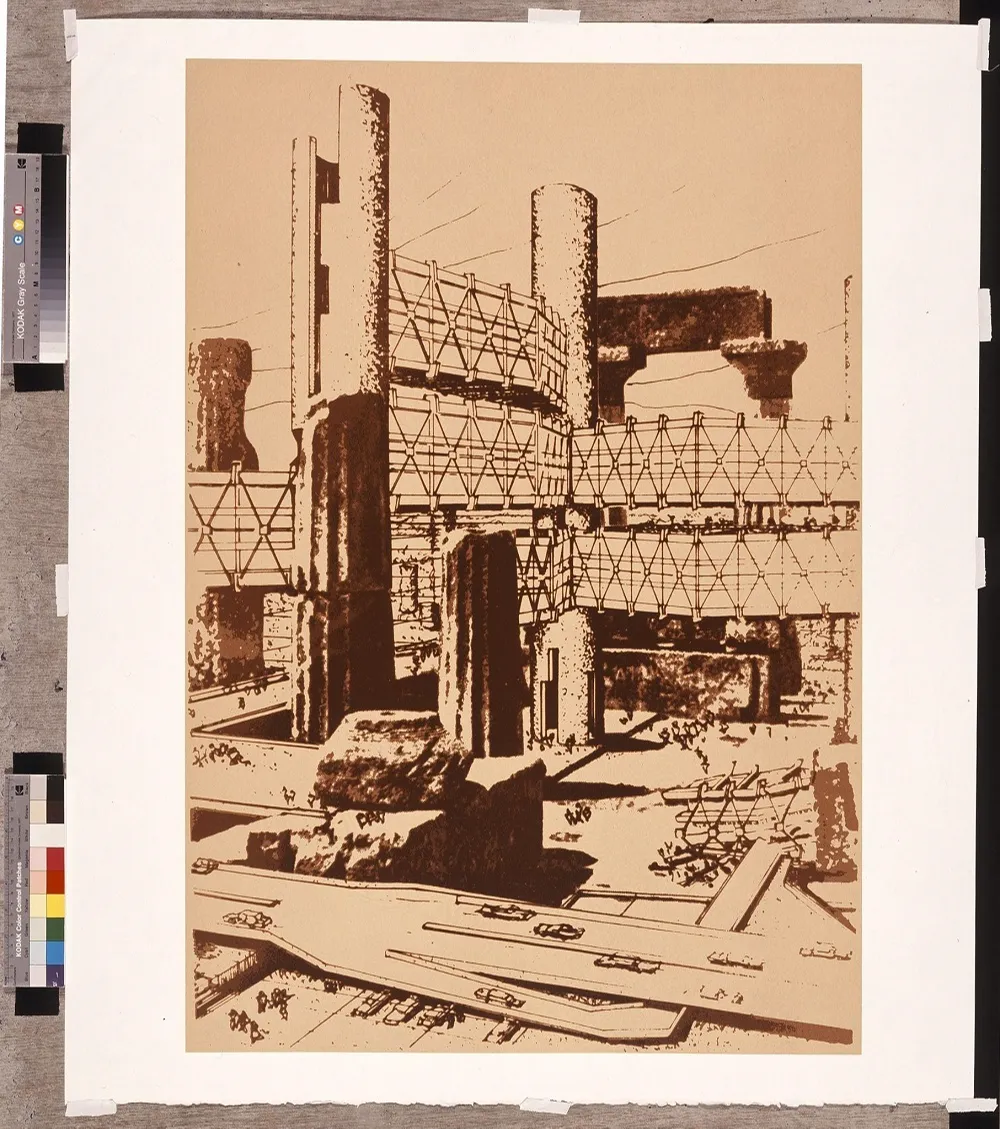
- Incubation Process Collage, 1962
©︎Estate of Arata Isozaki
230508/9:25/Rui
Thank you for your message and for sharing your thoughts.
It would be difficult to research Mr. Isozaki comprehensively, so we hope to narrow down some topics. For example, we could choose either the residential scale or the museum scale, or others. Or, regardless of scale, we could focus on the way the materials are handled (joints, use of different materials, etc.).
And then, we have to decide what to put in the venue. For example, ceilings are more difficult to be considered ad structure if they are to be directly modified. However, I wondered if it would be realistic if it were something like a stand light that would affect the ceiling.
I am also interested in things that are trivial but work on something as a whole, such as skirting boards on the border between walls and floors. (Maybe I can bring this to New York!)
There is no relationship between these and Mr. Isozaki yet. I would love to hear what you imagine.
230509/12:33/Sam, clovisbaronian
Certainly, we need to narrow down topics of interest. It would be great if our contribution to the exhibition could work as a subtle homage to Isozaki in some way, but perhaps in a way that is not too obvious.
We are excited by your proposal of modifying trivial architectural elements: subtly augmenting the gallery is, to us, much more interesting than building something obvious or ostentatious. Focusing on smaller elements or details is a good place to start. I also feel that these aspects of Isozaki’s work are often overlooked. I’ve been looking over some projects, trying to identify some interesting details and quirks. Below are a few quick thoughts and references:
(1) Carpet — This is a photograph of the reading room in Isozaki’s Oita Prefecture Library. I’ve been trying to find out more information about this space but have not had any success so far. I find the carpet fascinating, especially within the context of the rest of the library. A shag carpet in a non-domestic space is a very strange concept. But it gives the reading room a softness, and the mottled colors kind of read as an alien landscape. Bizarre, but also cool… Carpets are seen as a cheap flooring surface in the US, not commonly used by architects, but they are very common in residential buildings here.
(2) Exterior wall condition — Isozaki’s Shuko-sha Building (1974-75) is well known for the entry (it had multiple fake doors) but I think one interesting detail is the way the building touches the ground. The building is clad in simple travertine modules, but as it touches the ground, the travertine tiles splay out to the sides, almost like it is buckling. One could imagine a similar technique at the scale of a joint, board, or at the scale of a wall - ways to destabilize a white cube gallery.
(3) Light — I’m interested in your idea of a light design. I agree that directly modifying the ceiling would be a challenge - lighting or paint will probably be the most likely solution. We don’t have much experience with light fixture design, but I would like to hear more ideas about what you were thinking regarding this idea. When I think about light in regard to Isozaki, I am reminded of his text on darkness - he introduced Junichiro Tanizaki’s essay In Praise of Shadows to a lot of Western architects with that text. Not sure how that could be interpreted as a renovation… probably not relevant. Will think about that.
A few other thoughts on elements or pieces we could work on.
- curtain
- address/signage
- HVAC / fan (tubes of the Fukuoka Mutual Bank, Oita Branch (1966-67))
We will keep reflecting on these and also consider other possibilities. If any of this is of interest to you let us know!
230513/16:00/Rui
Hello, I’m sorry for replying in the middle of your text. I found your suggestions very interesting and exciting!
I’ll pick out a few words that struck me.
About Isozaki:
(1) ‟I think Tange, and his influence from Corbusier, likely laid the groundwork for this cosmopolitan approach to design.” (230503/18:12/Sam)
(2) “It’s surprising that his earliest work (Shinjuku White House) has managed to avoid that same fate.” (230503/18:25/Georgina)
(3) “Would it be possible for architects to act not simply as designers, but also as caretakers of the built environment?” (230503/18:25/Georgina)
(4) “Focusing on smaller elements or details is a good place to start. I also feel that these aspects of Isozaki’s work are often overlooked. I’ve been looking over some projects, trying to identify some interesting details and quirks.”(230509/12:33/Sam)
About element:
(5) “Carpets are seen as a cheap flooring surface in the US, not commonly used by architects, but they are very common in residential buildings here.” (230509/12:33/Sam)
(6) “Exterior wall condition. Isozaki’s Shuko-sha Building is well known for the entry (it had multiple fake doors) but I think one interesting detail is the way the building touches the ground.” (230509/12:33/Sam)
I am especially interested in the topic of the Shuko-sha Building. I am not going to be able to visit the site, so I will try to find the materials.
Have you been doing this kind of research on Isozaki for some time? Or, just started these days?
I went to Shinjuku White House this Thursday.
My first impression is that it simply does not look like an architectural work. I felt that it was a place where an old private house was renovated as a gallery. However, it was clear that it was a 5.4-meter (=3 Ken: Ken is a traditional Japanese module, with 1 Ken measuring approximately 1.8 meters.) cube and felt abstract.
The roof was heavily warped and dangerous. The walls seemed thicker, having been added to the original walls. According to Gaku, there is ivy crawling inside the walls as well. In addition, what remains of the original appearance seems to be the ceiling and floor finishes.
There may be some Isozaki-esque ways left in Shinjuku White House. But, to be honest, I don’t really have a clear idea when asked what exactly is the part of the house that is still Arata Isozaki-like. By the “Playful Pragmatic” ways, which is a theme of our exhibition, we can find something interesting in the house.
230517/21:29/Georgina, clovisbaronian
Hi Rui,
We are certainly not experts on the work of Isozaki-san. I’ve only really known him through his more celebrated built works. The Art Tower Mito (1986-1990) was an important project for me when I first began my architecture studies. In these past few weeks, Sam and I have been looking more deeply through monographs and texts. There is in fact a project by Isozaki-san in the city in which I am currently teaching - COSI (Ohio Center of Science & Industry) (1994-1999) in Columbus, Ohio. It was a renovation project to convert an existing high school into a children’s science museum. It was completed shortly after the Domus: La Casa del Hombre (1993-1995) in Spain, also a science museum. You can see the similarities in the two-faced nature of the structures and some formal likeness. This is something I understand Isozaki-san was criticized for, in the past, for repeating certain tropes in his work. But I think alternatively one could read it as a practice of working through a design interest through multiple scales, programs, or contexts.
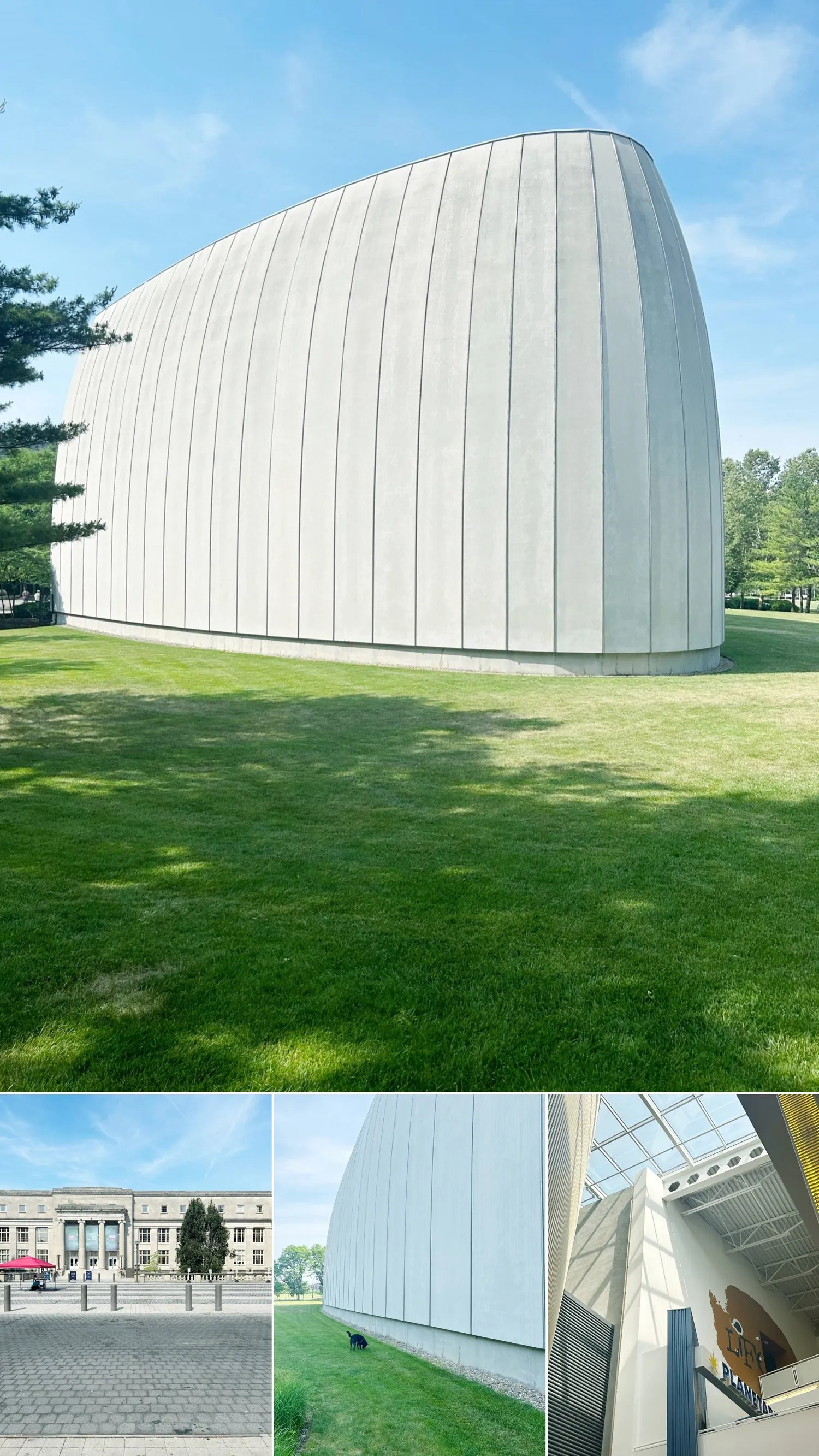
- COSI. We walked around the campus the other day.
Photo: Sam Clovis
I’m glad you were able to make it to Shinjuku White House for a visit. Considering Isozaki-san never celebrated his authorship of the building, I am not surprised that it doesn’t express any of his signature interests.
As a follow-up to our earlier correspondence, Sam and I were discussing the possibility of the project responding to the necessary maintenance of WHITEHOUSE. For example, to repair damage or prepare against future weathering. Patching, replacing, and covering, areas that need attention. This could be a way to have the work be not just an installation but also act as a conceptual renovation. Of course, it could still be very simple and use the smaller elements and details we discussed previously. (Carpet replacing flooring, baseboards to cover splitting joints, etc.) Are there any interior or exterior elements of WHITEHOUSE that you could see needing maintenance? You mentioned the ceiling is of concern, but perhaps there are additional areas that warrant attention.
I think it could be interesting to propose an intervention that simultaneously consists of small repairs, but at the same time creates a holistic and singular gesture. This is something I admire very much in Isozaki-san’s work.
230519/10:24/Rui
Thank you for your message.
COSI, it is so cool!
I just checked it out for the first time and was surprised to see that it has quite a presence against the city, with the contrast between the front and back, and the long facade against the river. In contrast, Sam’s photos are on a very familiar scale (especially to the cat?) I would love to visit in person in the future and experience the fusion of scale. I also felt I needed to visit the Art Tower Mito again.
I’ll show you some pictures I took.
(1) Background set up for the exhibition
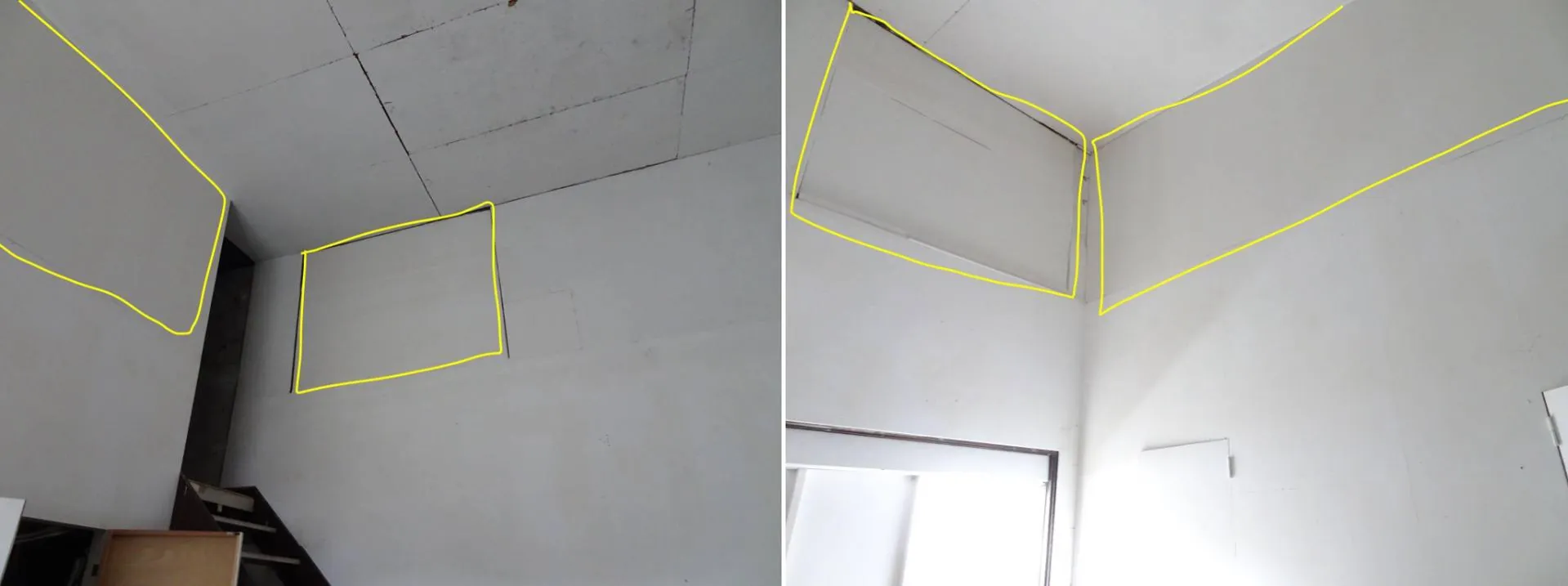
- Windows blocked off for exhibition space.
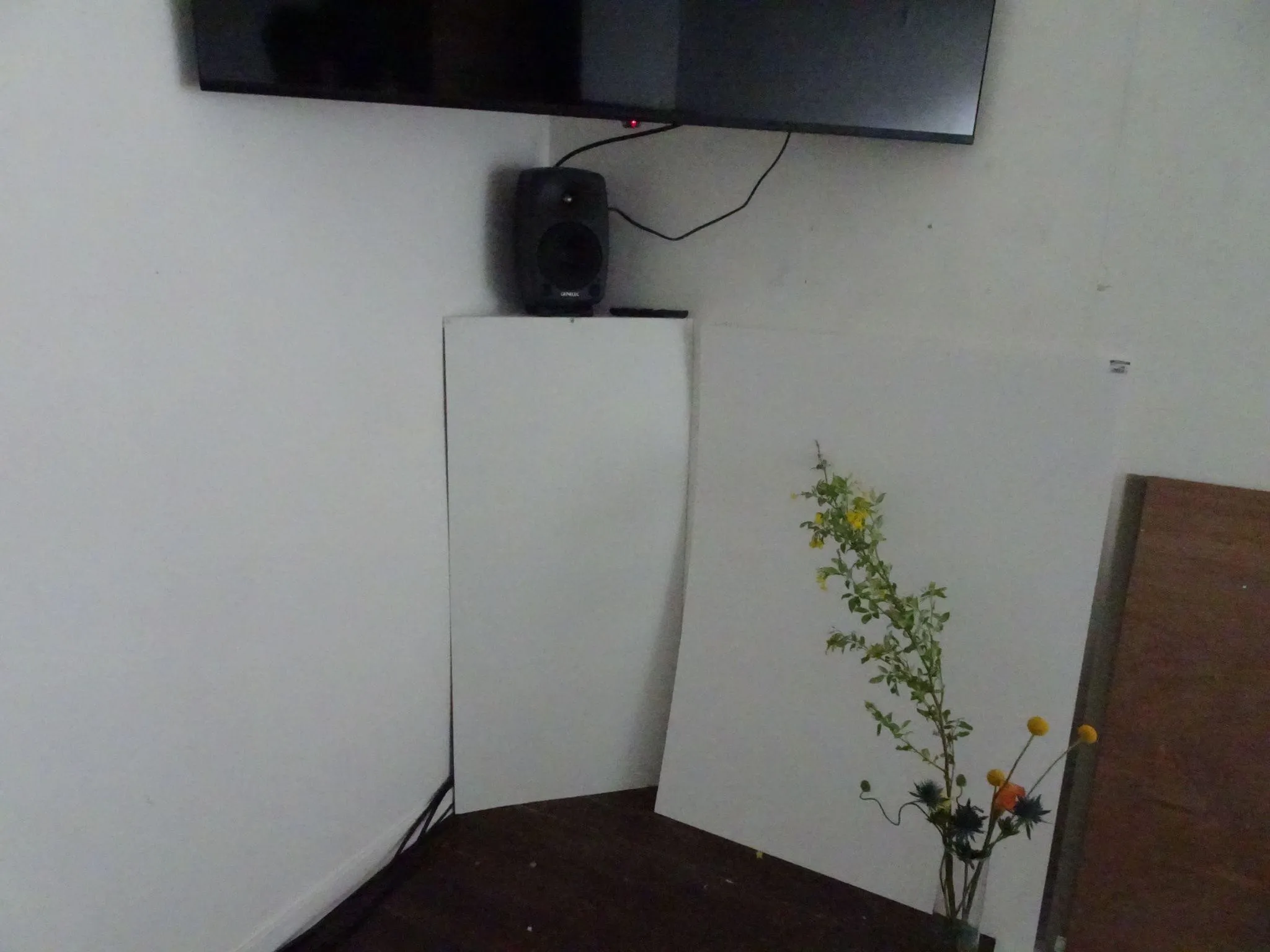
- A sort of triangular stand that hides the wires for display.
I think that the nature of the white cube as a white cube (perfect cube) has been enhanced or developed as an exhibition environment, making the white cube uneven.
(2) Walls with visible history of renovation.
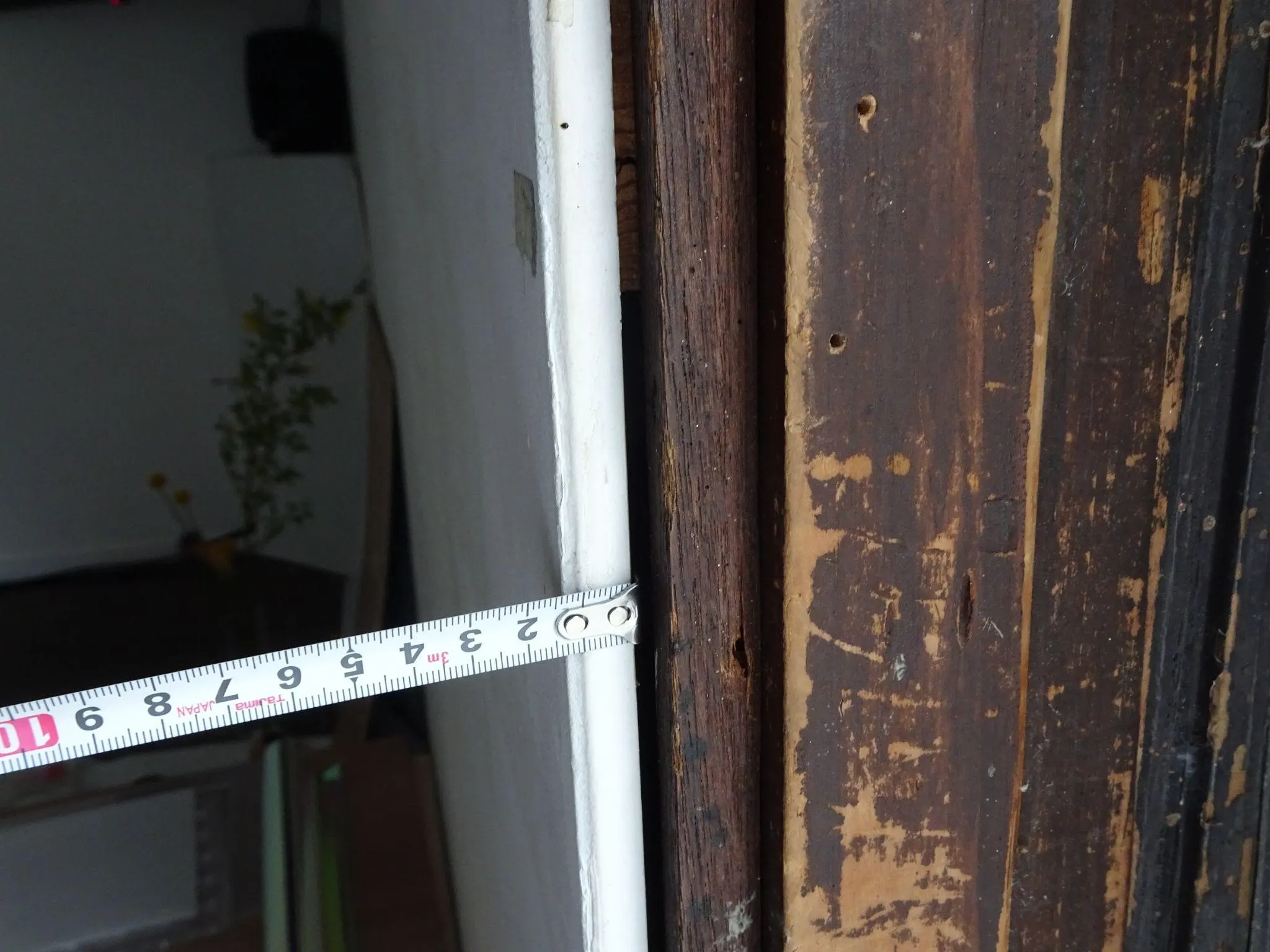
- Plasterboard affixed for the gallery
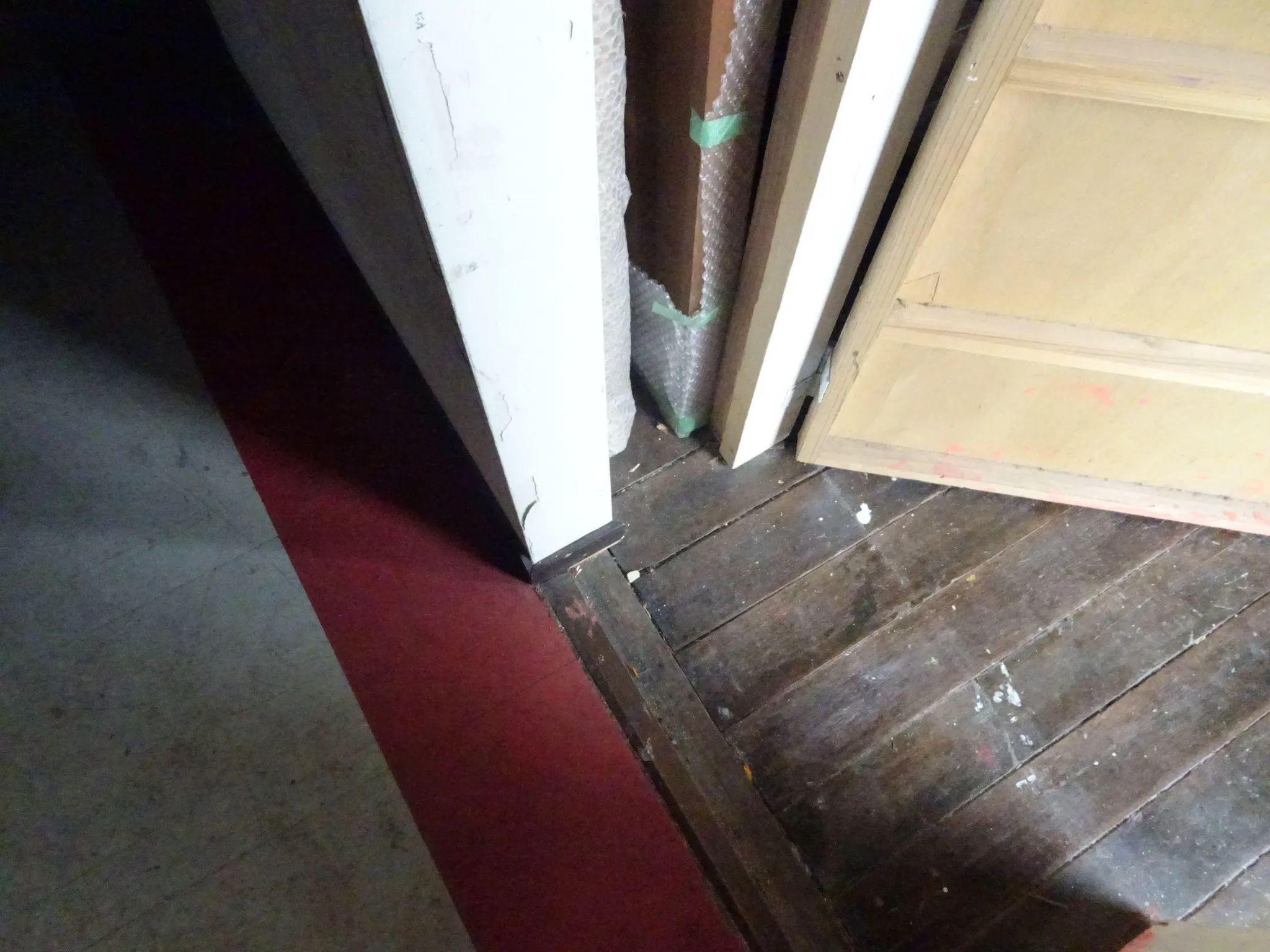
- Canvas works stored within the thickness of the original and new walls.
(3) Under the stairs
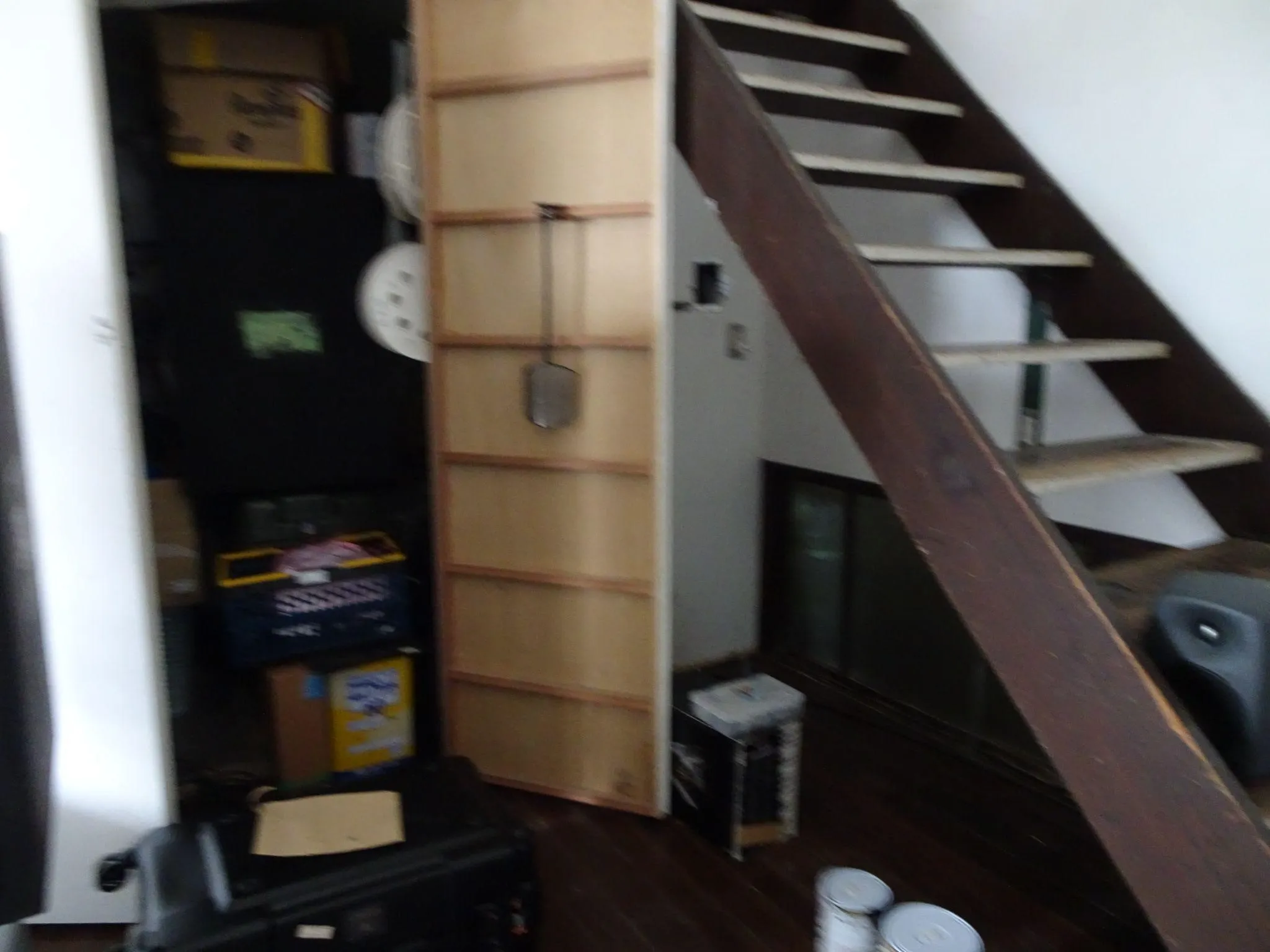
- Somewhat neglected under the stairs (Sorry for the out of focus)
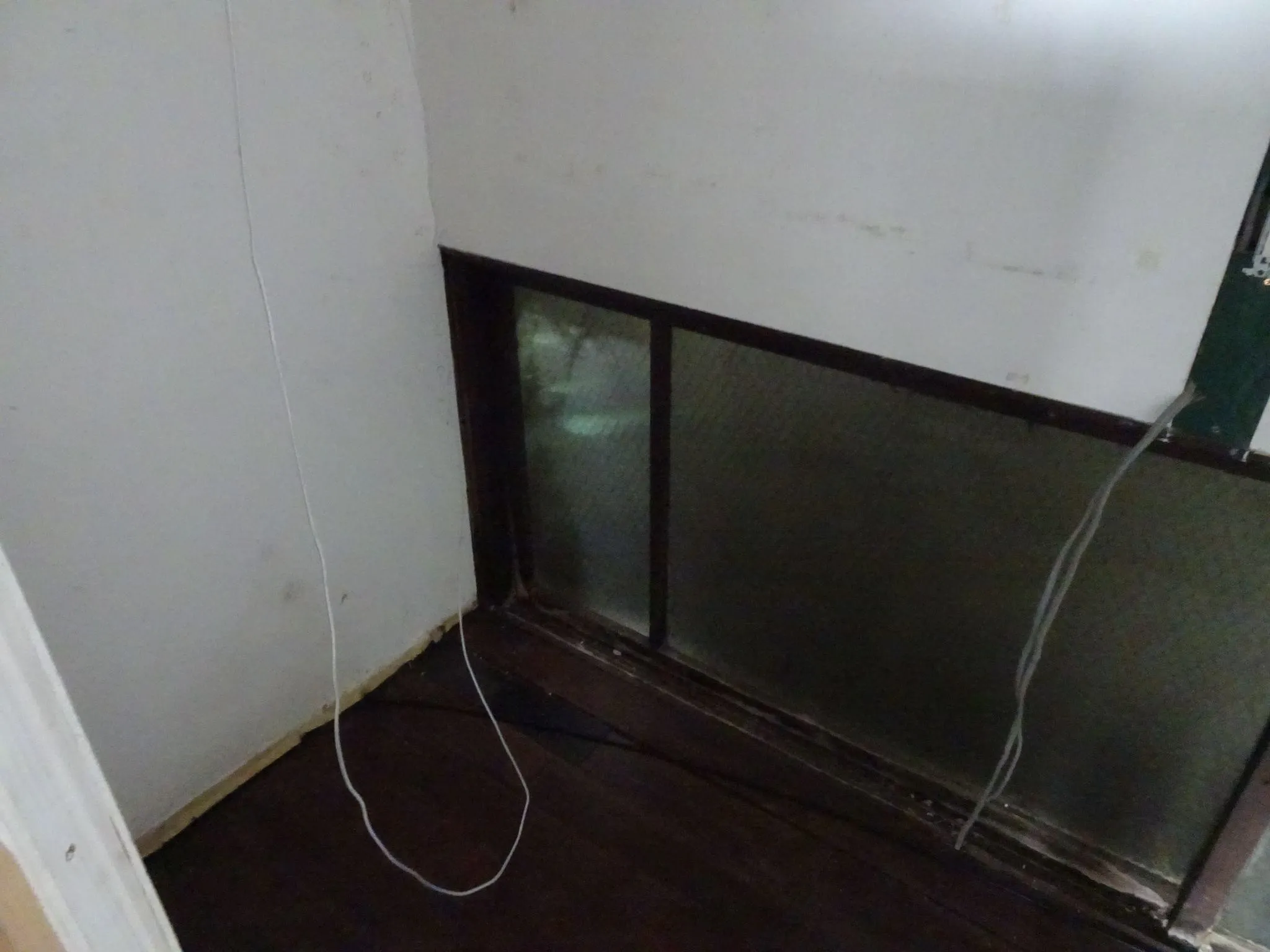
- Small window at the bottom of the staircase (next to a building standing next to it, so it doesn’t open)
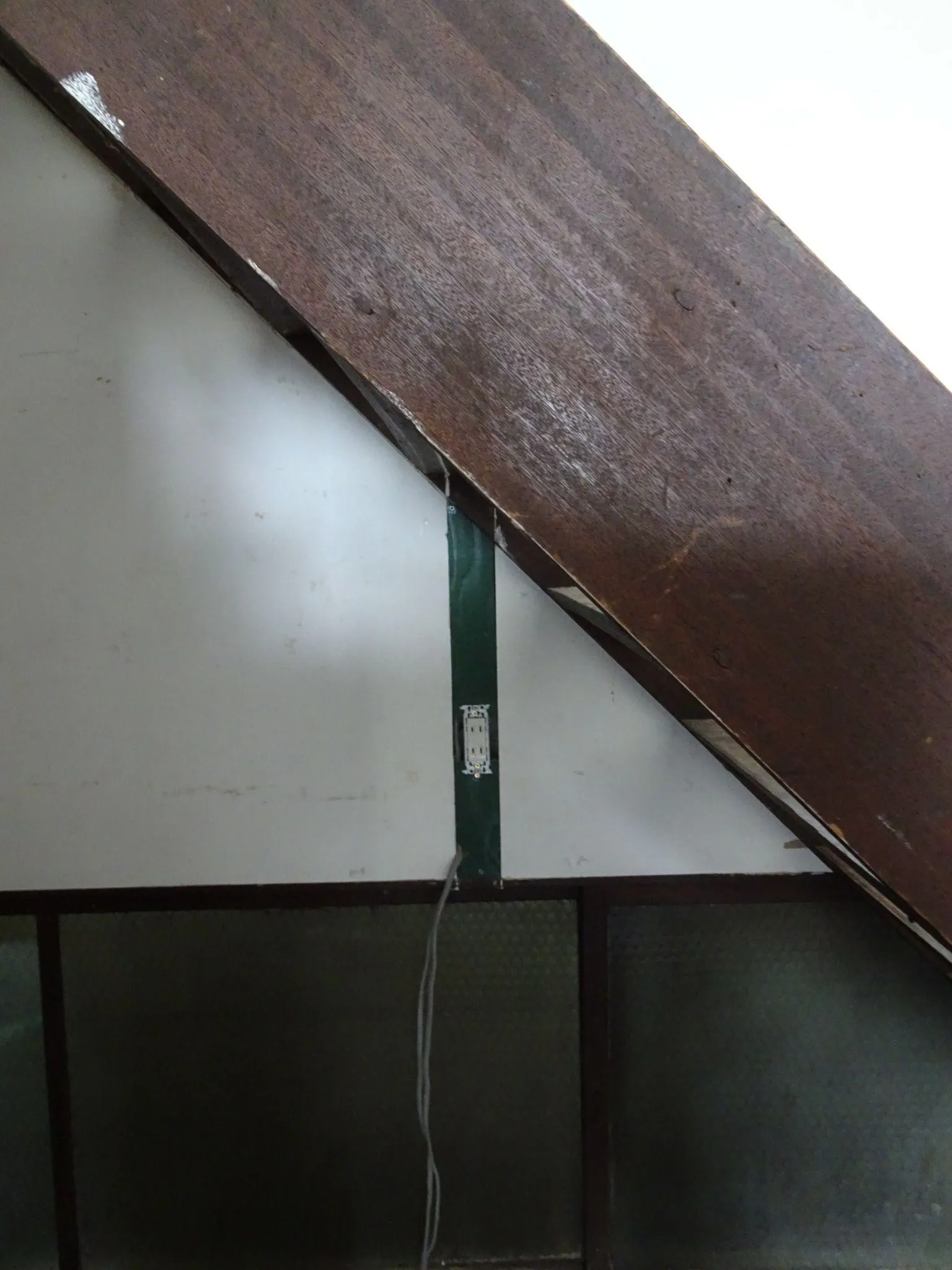
- Exposed electrical outlets
(4) others
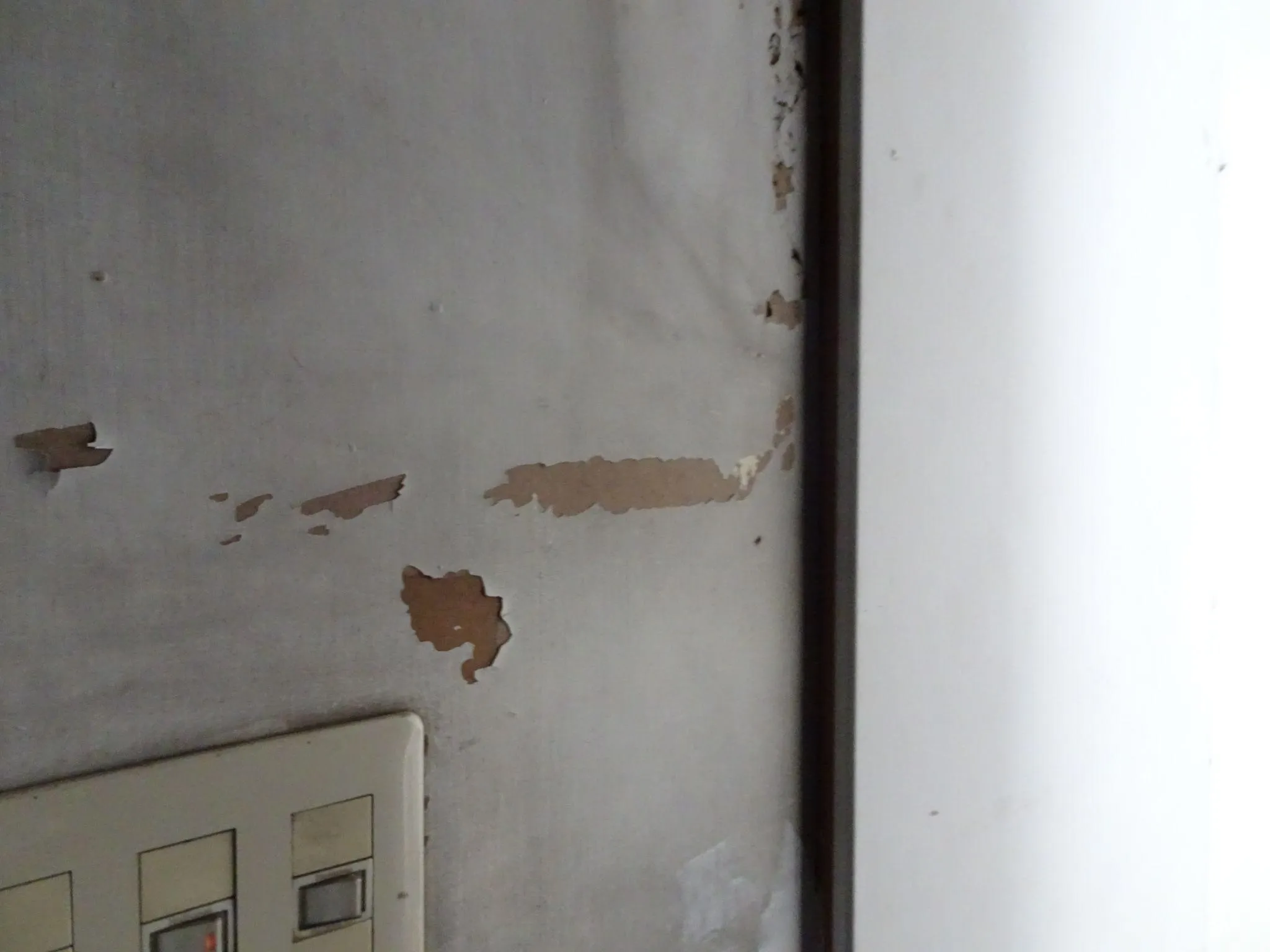
- Second-floor wall (The gray part is said to be the material used when the construction was completed.)
All Photos: Rui Itasaka
I have more pictures I took, but here are the photographs to show my interest.
I was looking back and noticed “under the stairs.”
We could make a window frame that can out-set something, or make something like curtains.
Or maybe a door under the stairs to create a single space.
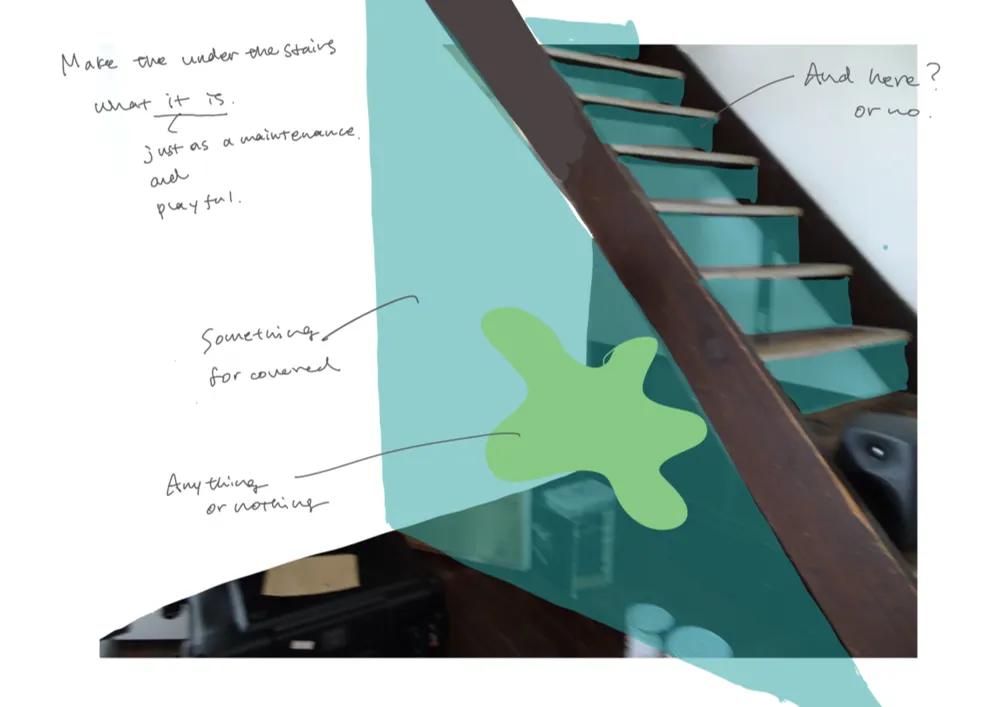
What do you think?
It could be in another part of the house, or maybe we could focus on somewhere more under the stairs.
230531/19:44/Sam, clovisbaronian
Hi Rui,
Thank you for your feedback and these photographs. I appreciate your interpretation of the gallery, and the idea of a perfect white cube gallery has to distort, cover, or thicken to accommodate or hide other functions. We were also intrigued by the window that sits beneath the staircase of the gallery. According to Gaku, there was originally a wall at this area beneath the stairs, and the space was used for storage. However, the current owner removed this wall to open up the space of the gallery. I’m not sure they will want to enclose that space again. The idea of enclosing or veiling a space is quite interesting though! This idea of the white cube subtly transforming, swelling, leaning, or shifting to accommodate a new type of function could be something to explore, but I am unsure what form this would take, maybe in relation to the base image of the Shuko-sha Building we showed previously. Perhaps you have an idea here…
Considering the main gallery of the WHITEHOUSE is a rather standard open gallery, it could be interesting to attempt to create zones or smaller spaces within the gallery through the use of surface, color, or material. In this way, would it be possible to create a space without the need for an enclosure? This is something that our practice is always interested in exploring.
I am drawn back to the reference image we shared earlier, of the carpeted space in the Oita Prefecture Library. It has such an impact through the juxtaposition of its texture and color, creating a new environment.
This idea of carpet could be interpreted by us in multiple different ways. Please see some options on the next page.
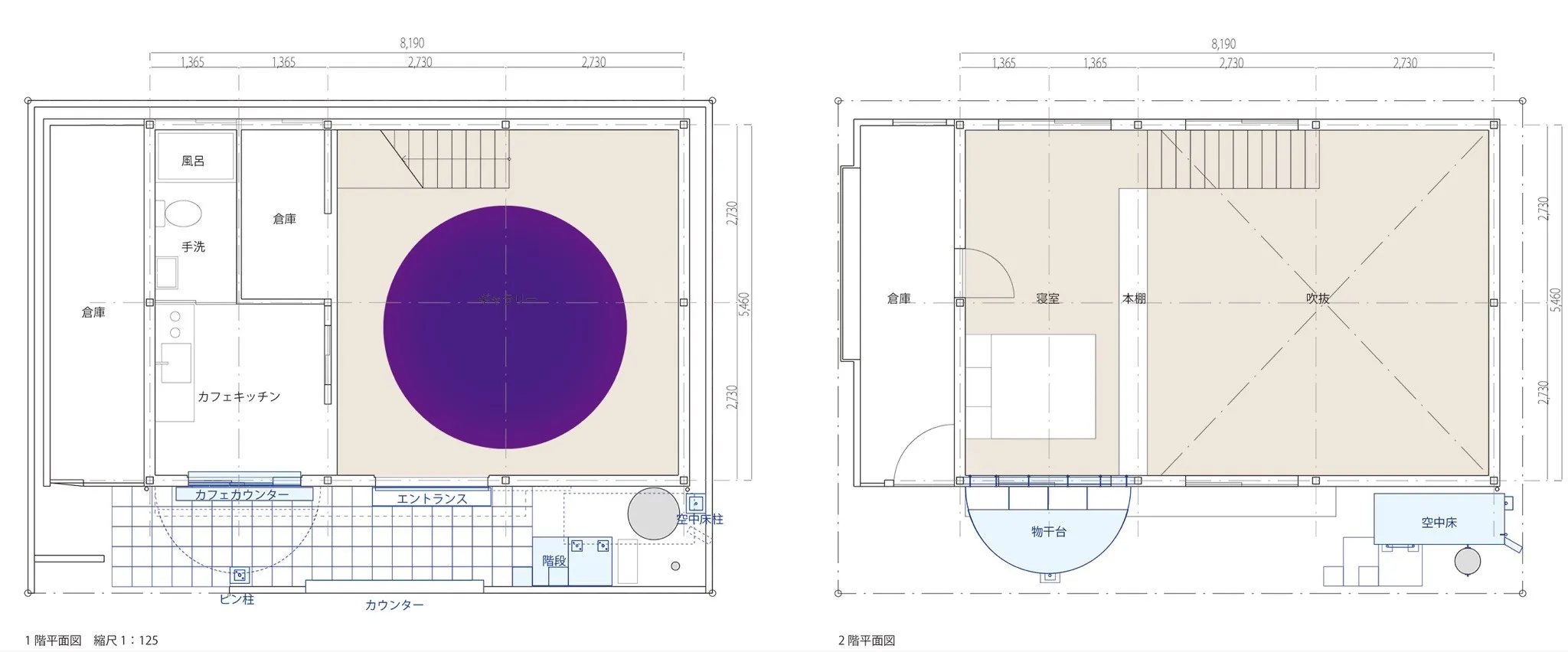
These are just simple diagrams, not intended to represent shape/design!
Option 1. We collaborate together on one large carpet or textile piece in the main gallery space.
(1A) Carpet extends to the walls to feel as if the entire floor is replaced.
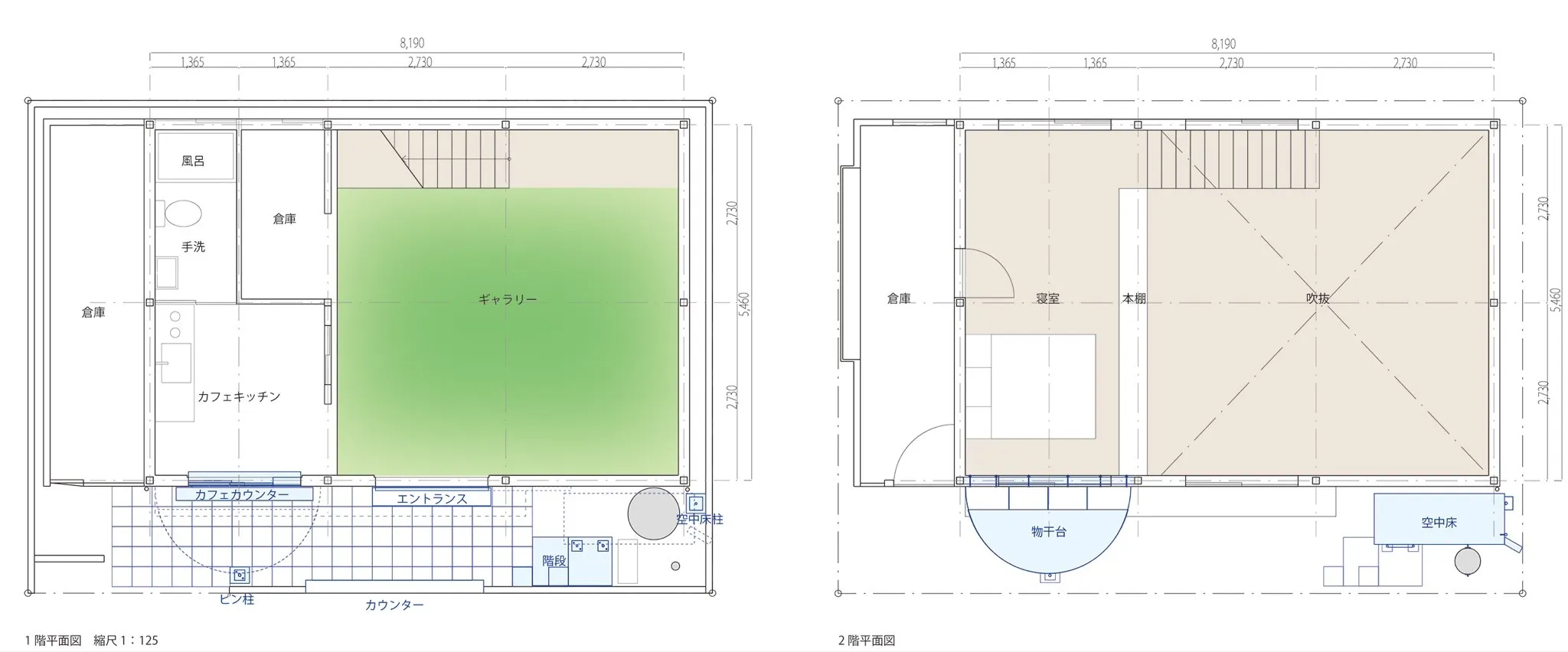
(1B) Carpet sits as an object or shape within the space.
(1C) Cover all second-floor and extend down the stairs.
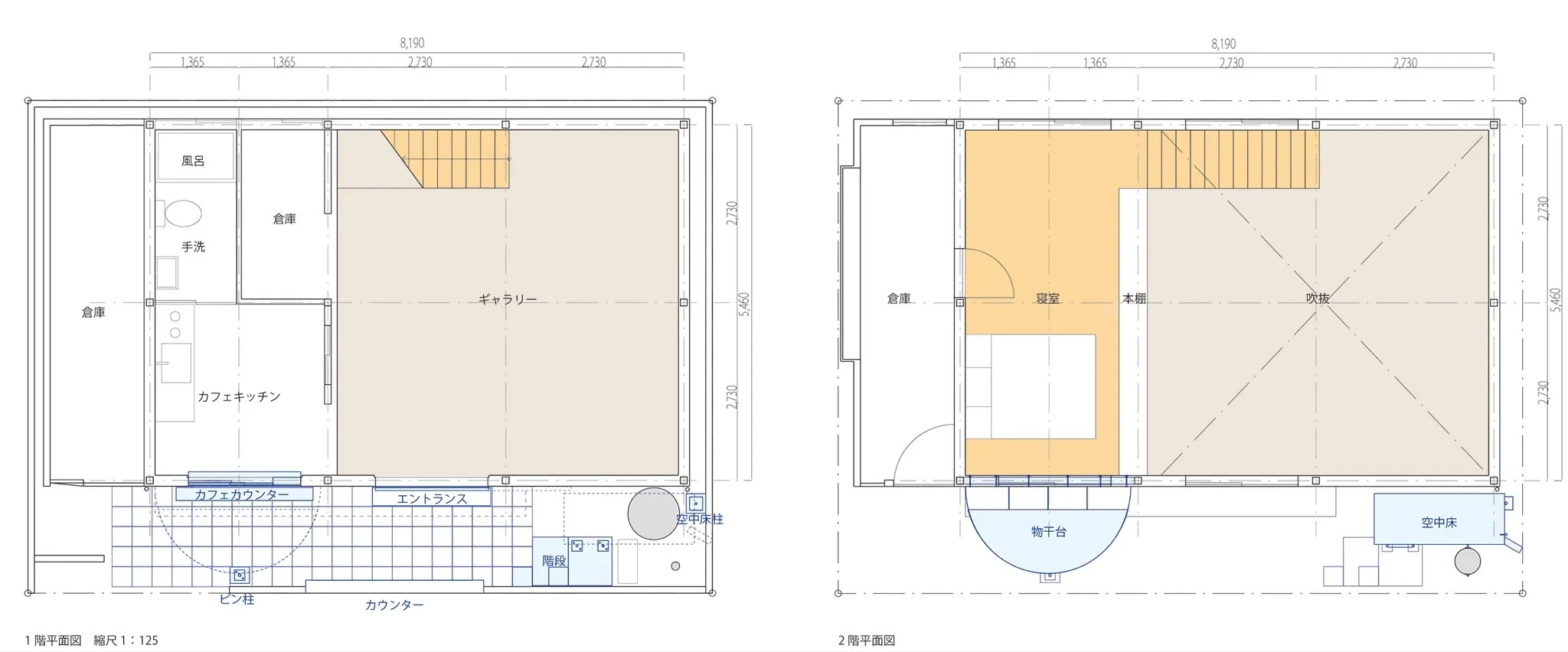
Option 2. Rui Itasaka and clovisbaronian each design their own carpet. The two carpets have a connection or dialogue in some way (color, shape, concept, etc.). But can be different design languages. One is manufactured in Tokyo, the other in US.
(2A) These carpets could be set throughout the Whitehouse and be designed for specific sites (entry mat, stair runner, upstairs, etc.)
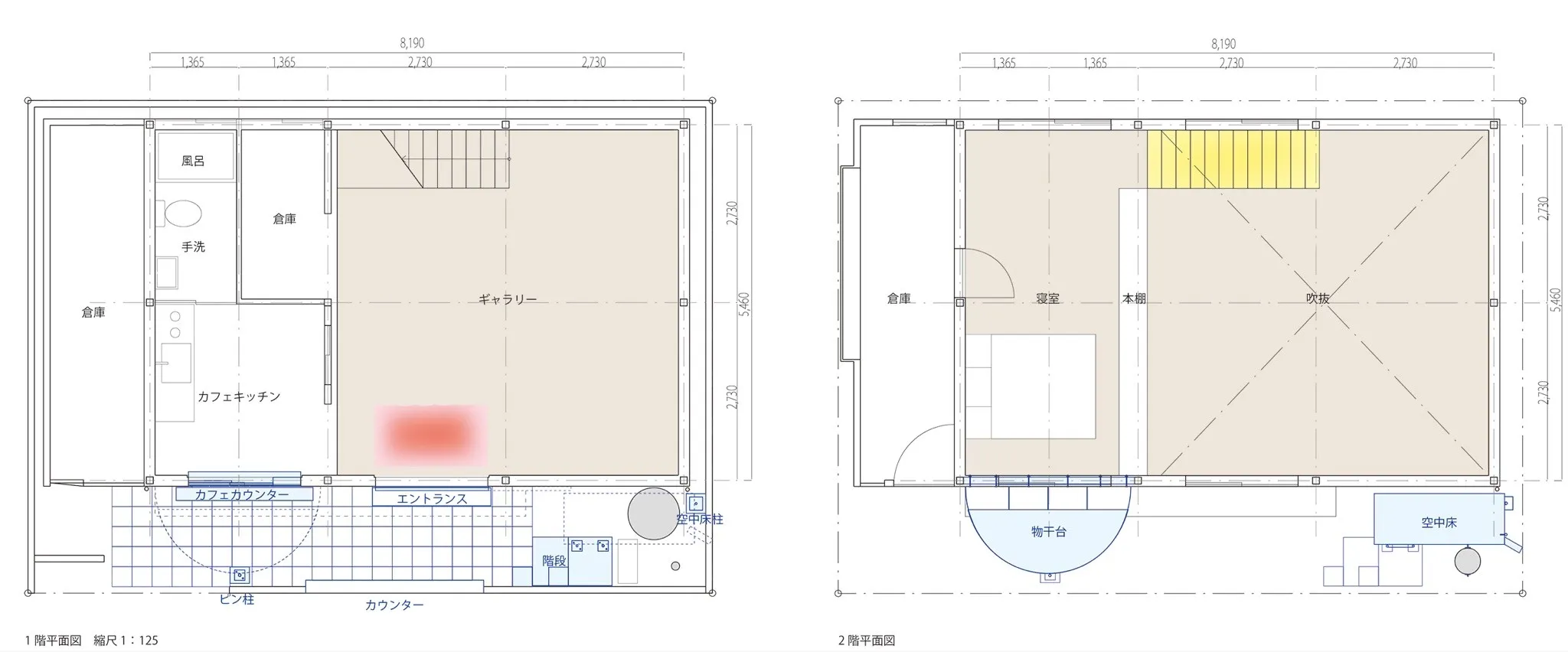
(2B) Two objects sit in the main space.
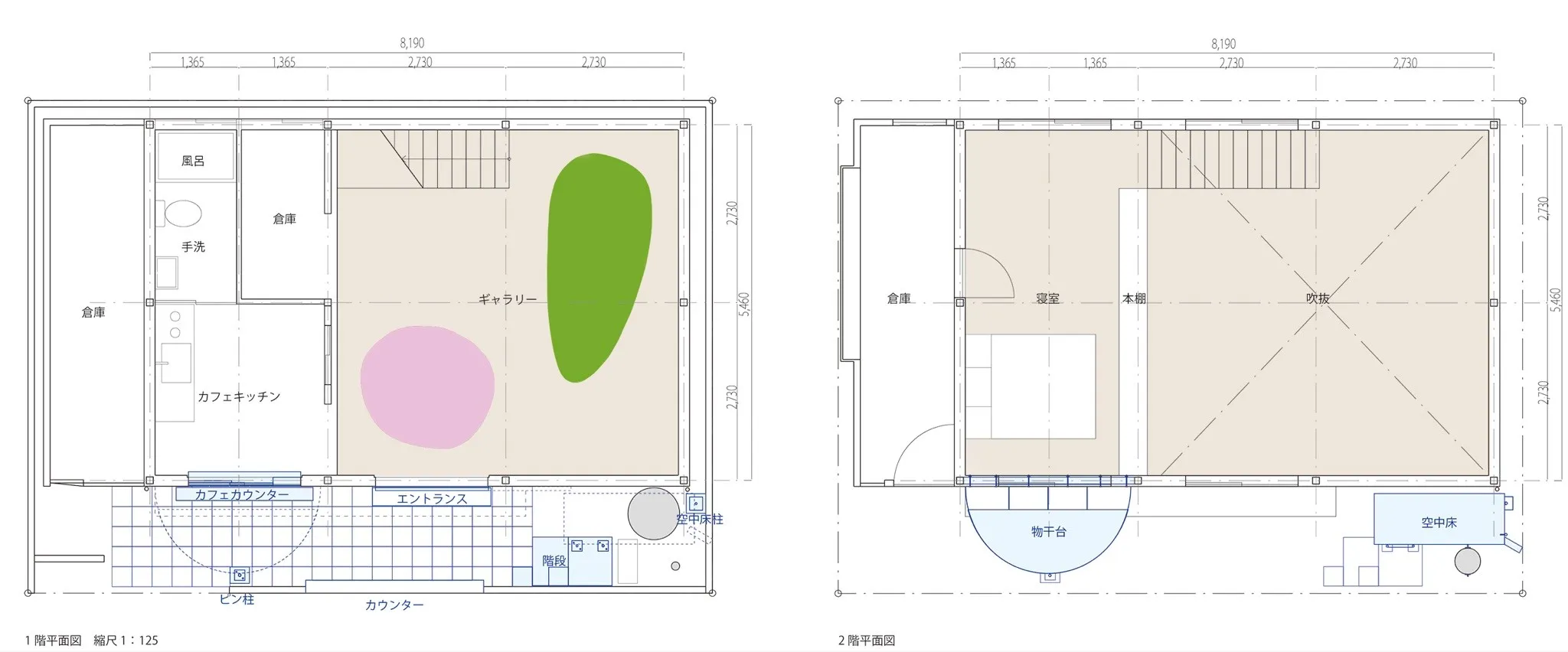
With the design of the textile, we could explore color, shape, and texture to transform the environment of the gallery. Not necessarily in relation to any of Isozaki’s work, they could be very playful! For example, similar in form to the shapes you have incorporated into your holiday cards.
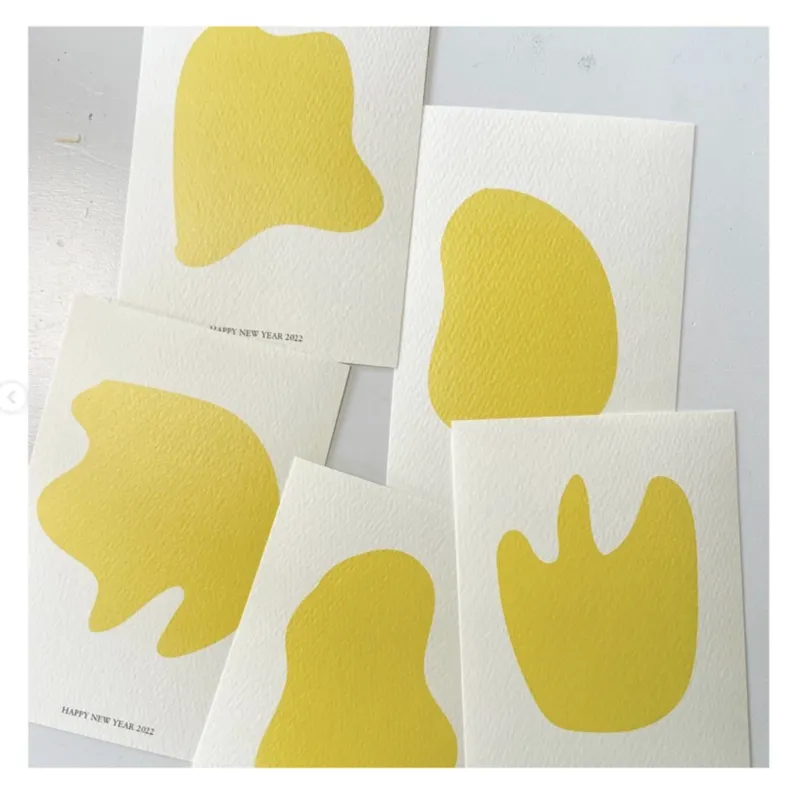
- Holiday cards designed by Rui Itasaka
These are so fantastic!
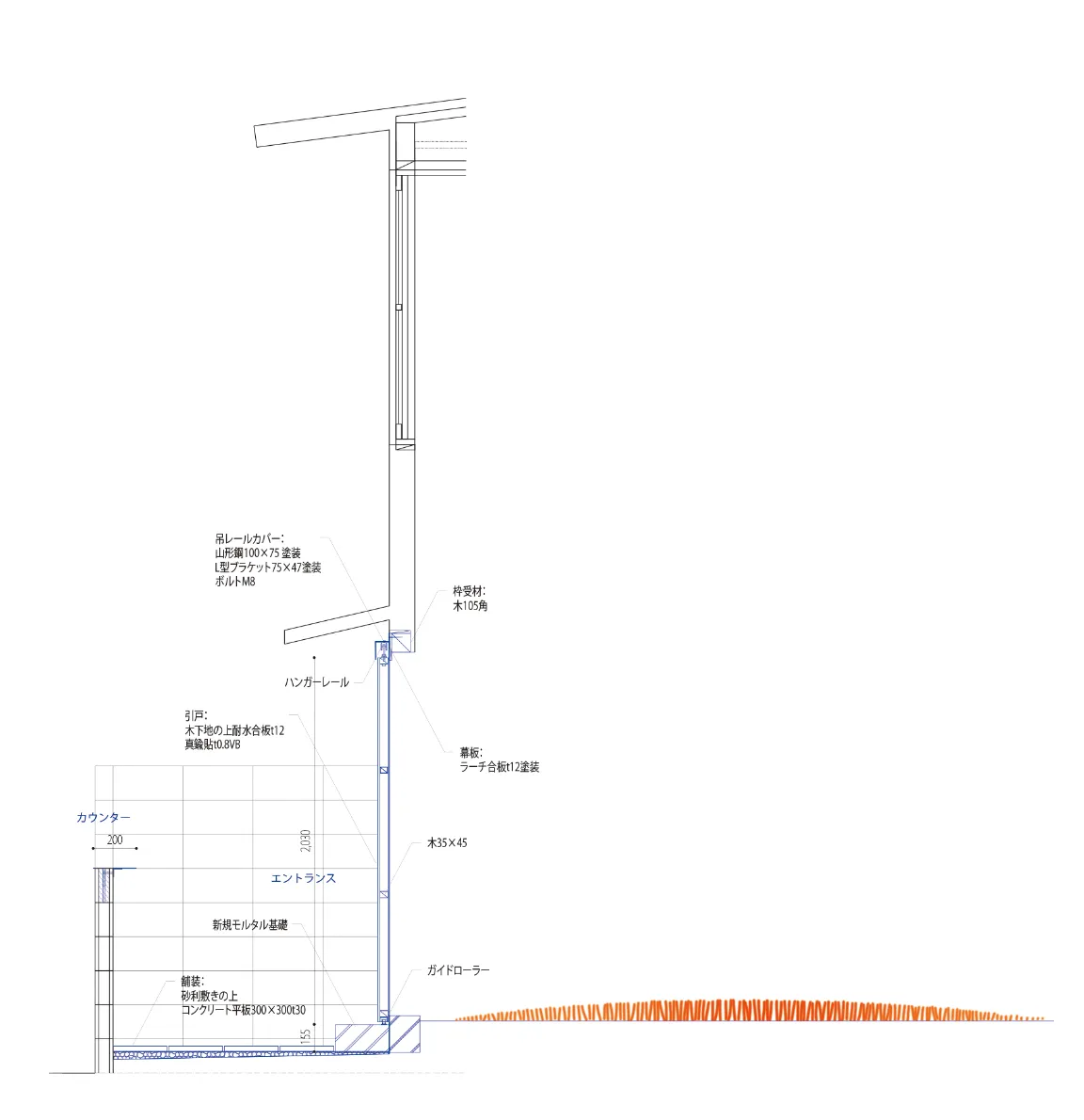
We could also play with the section or height of material to create mounds.
Would this idea be of interest to you and your office? Not necessarily carpet, but the idea of transforming space through surface treatment? A lot of things to work out for how to fabricate, materials, etc. But we feel that it would be something that could be made within the budget and still have a large impact.
230602/03:59/Georgina, clovisbaronian
Hello Rui,
I’m sorry to hear you are not well and hope that you are feeling better! Has Gaku informed you of the conversation in yesterday’s meeting? I’m curious if you could speak on your feelings towards Isozaki’s work? Are young architects in Japan interested in the work of that generation?
230607/19:51/Rui
Hello, I am finally feeling better. Thanks for your patience.
I feel very energized after reading your ideas, but we should talk more about Mr. Isozaki:)
As I may have mentioned before, I have not really been in touch with Mr. Isozaki. However, not all of my generation is like me. I believe there are not a few of us who studied and read Mr. Isozaki’s books. So, I am wondering where I can begin to talk.
One thing I recall: three years ago, I produced a book called Through Hanmugi Hat about my first work Hanmugi Hut. The book contains a conversation with Tezzo Nishizawa, who designed Hammugi Hut with me. Tezzo said,
“We have to think about the meaning of ‘plan,’ don’t we? Planning defines as a completed project in advance, but this is becoming impossible today. I wonder how much we have been able to delve into this issue since Mr. Arata Isozaki turned planning on its head. I feel that what it means to plan and what it means to make things is becoming an even more important and innovative theme.”
I wasn’t very aware of Mr. Isozaki at the time, so I didn’t really understand what Tezzo told me. Now, I wonder if his remarks might be in line with the pragmatism that is the theme of our exhibition.
In Japan, more and more projects are being planned for how to cause schedule disharmony. Renovation projects are to be planned for requests that deviate from the original plan of “conversion” in the first place. The question is how to design with an attitude toward what was not planned and what cannot be planned. I have not been able to research it properly, but perhaps Arata Isozaki’s “Process Planning Theory” or something like it might be helpful.
What do you think?
230607/19:31/Georgina, clovisbaronian
Hi Rui,
I think you are certainly correct in the relevancy of Process Planning as regards the issues of interest to our generation of architects. The traditional pursuit of “an ultimate terminal image frozen from change” is the point of critique for Isozaki-san in that text, amongst a few other grievances. The idea that architecture was confined to the realization of a singular vision, or to Nishizawa-san’s point that you mentioned, a “completed project in mind in advance”. Isozaki-san seemed to be suspicious of this idea of completeness. I feel there is a general aversion to an overly deterministic design outlook.
I think we have a similar suspicion when it comes to a kind of idealism or utopian project. In many ways, our existing built environment places real constraints on this design method - it becomes difficult to reconcile the pursuit of an idealized architectural condition when recognizing the messy reality we live and work within. Not to mention the fact that for many of us practicing now, we are often working from a found condition that often-times includes the use of existing built structures. For Isozaki-san, Process Planning attempts to think at multiple time-scales, to design for the present and the future simultaneously. Perhaps a “pragmatic” approach to architecture would be an alternative (if not intentionally less-ambitious) design framework through which to consider addressing this problem of the unachievable ideal.
Isozaki-san called architecture that is designed too specifically for a singular purpose, and therefore that will undoubtedly become obsolete, “closed architecture”. Today we must work to augment or free the closed architecture we have already received.
230610/18:59/Rui
Hello. It seems to me that our project is becoming much more interesting.
Architects of my generation, including myself, seem to be devising ways to avoid architecture as a vessel for function by developing a design process that does not result in a closed architecture, and by designing the process of construction and use of the architecture together. The exhibition at WHITEHOUSE, which GROUP has conducted, also shows such an attitude.
It is interesting to consider that our proposal for the floor, which we are considering for this exhibit, is also about liberating Shinjuku White House by augmenting (“accentuating” or “tuning” perhaps) an architectural finish that has nothing to do with function.
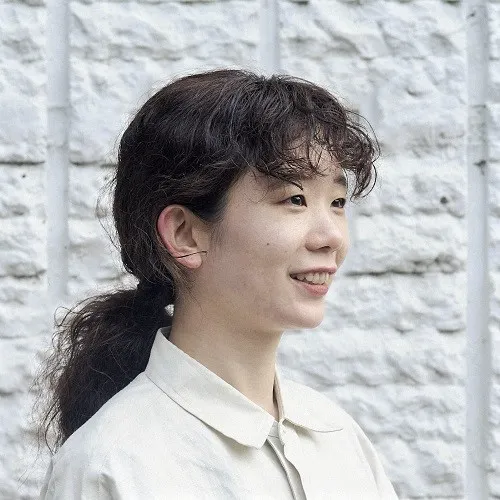
- 板坂留五/Rui Itasaka
- 1993年生まれ。2016年東京藝術大学主席卒業。2018年同大学院を修了後、《半麦ハット》をきっかけに独立。Architects of the Year 2019入選、Under 35 Architects exhibition 2021 Gold Medal など受賞。ほか、パン屋の改修《TANNERAUM》、アートブック『半麦ハットから』の出版、アパートの改修《角部屋の眺め》など。設計を通して、大きさに関わらず、建築のもたらす「気づき」を扱いたいと考えている。 Born in 1993, graduated from Tokyo University of Arts in 2018, became independent with Hanmugi Hat. Received awards such as Architects of the Year 2019 Honorable Mention, Under 35 Architects exhibition 2021 Gold Medal, etc. Other projects include the bakery renovation TANNERAUM, and the publication of an art book, Through Hanmugi Hat, and renovation of apartment Scenes of A Corner room. Through design, regardless of size, I hope to deal with the “Awareness” that architecture brings.

- クローヴィスバロニアン/clovisbaronian
- クローヴィスバロニアンは、ジョジーナ・バロニアンとサム・クローヴィスが主宰する、カリフォルニアとテキサスを拠点とする建築事務所である。作品をつうじて、風土と美学の相互関係を探求している。 ジョジーナ・バロニアンは、1990年ニュージーランド生まれ。ニューヨーク州登録建築士、ライス大学建築学科助教。プリンストン大学で建築学修士号を取得後、SANAAと石上純也の事務所を経て、独立。ラファージュ・ホルシム財団持続可能建設次世代グローバル賞、ハワード・クロスビー・バトラー・トラベリング・フェローシップなどを取得するなど、国際的に高く評価されている。最近ではオハイオ州立大学ノウルトン建築学校のハワード・E・ルフェーヴル'29 エマージング・プラクティショナー・フェロー(2022-23)を務めた。 サム・クローヴィスは、1991年アメリカ生まれ。カリフォルニア州登録建築士。プリンストン大学で建築学修士号を、カリフォルニア州立工科大学サンルイスオビスポ校で建築学士号を取得。研究や設計作品は、ソウル建築都市ビエンナーレやヴァン・デル・プラス・ギャラリーなどで、展示されている。プリンストン大学、カリフォルニア州立工科大学ポモナ校、オハイオ州立大学などで教鞭をとり、現在はヒューストン大学で教鞭をとる。 clovisbaronian is an architecture practice based in California and Texas lead by Georgina Baronian and Sam Clovis. Their work explores the interrelation of climate and aesthetics. Georgina Baronian (New Zealand, 1990) is a licensed architect in the State of New York and Assistant Professor of Architecture at Rice University. Prior to establishing an independent practice, Georgina worked for the offices of SANAA and Junya Ishigami. Georgina has been internationally recognized for her work with the LafargeHolcim Foundation for Sustainable Construction Next Generation Global Prize, the Howard Crosby Butler Traveling Fellowship, and was recently the 2022-23 Howard E. LeFevre ’29 Emerging Practitioner Fellow at the Knowlton School of Architecture. She received her Master of Architecture from Princeton University. Sam Clovis (USA, 1991) received his Master of Architecture from Princeton University and Bachelor of Architecture from Cal Poly San Luis Obispo. His research and design work has been widely exhibited, including at the Seoul Biennale for Architecture and Urbanism and the Van der Plas Gallery. Sam has previously held academic positions at Princeton University, Cal Poly Pomona, The Ohio State University, and currently teaches at the University of Houston. He is a licensed architect in the State of California.
#3 Korogaro Association/Kengo Sato Architecture Office ⇄ Departamento del Distrito < 前の記事